
Wedding Dress Garment Bag: Storage, Transport and Flights Without Wrinkles
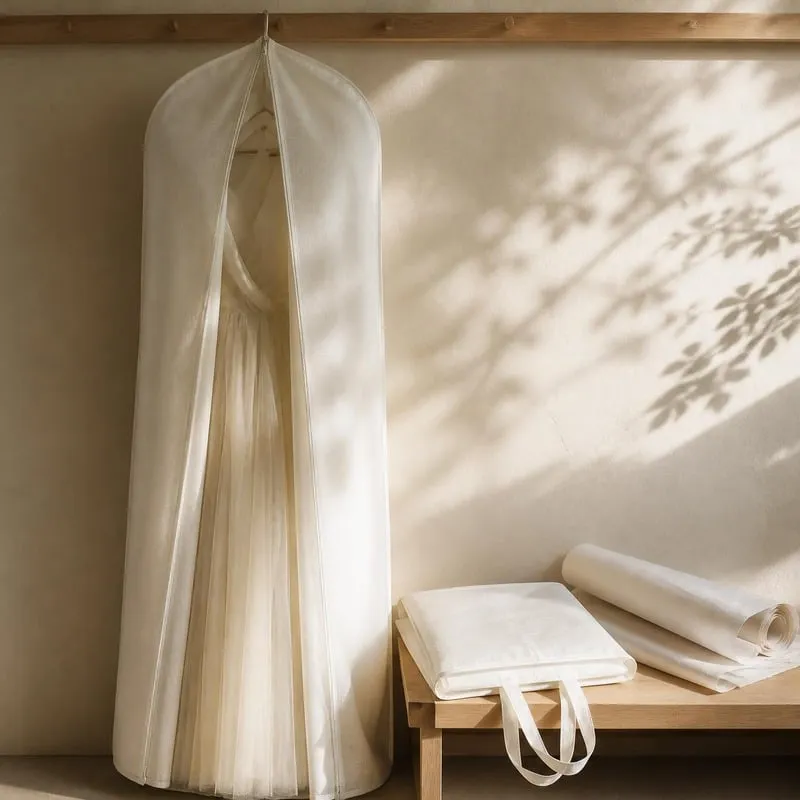
How to use a garment bag for a wedding or evening dress in the weeks before the wedding, on the way to the venue and on a flight, and in storage after the event: hanging loops, proper folding, and when not to hang at all.
A wedding dress cover does three different jobs: it protects the gown in the weeks between picking it up from the bridal salon and the wedding, shields it on the way to the venue, the photo shoot or the flight, and stores it long-term after the event. Each stage has different demands. At home you need a breathable cover with enough depth that it doesn't crush the skirt; on the road you need a cover that folds and carries without creasing; and for long-term storage you also need to ask whether to hang the dress at all or fold it. This guide walks through all three stages, the hanging loops and the choice between hanging and folding.
A wedding dress cover in three situations: at home, on the road and in storage
Before the wedding: the dress hangs in the closet for a few days or a few weeks. What matters here is that the fabric can breathe, that the skirt gets room to spread, and that the cover blocks light. A non-woven fabric cover with side depth suits this stage.
On the road: the dress moves to the car, the makeup salon, the venue or the plane. What matters here is carrying handles, a cover that folds to a convenient size, and a layer that protects against spills or rain.
After the wedding: the dress is kept for months and years. Here the cover is only part of the solution, alongside cleaning, tissue paper and the choice between hanging and a box.
We covered the differences between materials, lengths and depths in the guide How to choose a dress and suit cover. Here we focus on the use itself.
Before the wedding: the weeks between the salon and the event
Many dresses leave the salon in a thin plastic bag. It's fine for the ride home, but not for weeks in the closet. Plastic doesn't breathe, and according to wedding dress preservation companies, leaving a dress in a plastic bag is a major cause of yellowing. It's worth moving the dress into a breathable cover on the day you pick it up.
A dress with a full skirt or tulle layers needs a cover with depth. The wedding dress cover with 25 cm depth is 60 cm wide and 180 cm long, made of breathable non-woven fabric, with a clear window and a full-length zipper. For an especially wide gown there is also the 70 cm wide wedding and evening dress cover, 180 cm high and 25 cm deep. When the skirt isn't squashed, it also doesn't arrive at the wedding with creases down its length.
Hang it in a cool, dry, dark place, away from the kitchen, smokers and heat sources.
Keep the dress out of reach of children and pets.
Don't squeeze the dress between other clothes in the closet. Even a cover with depth needs free space on both sides.
Close the zipper all the way so dust and light can't get in from below.
Hanging loops: why they are sewn into the dress
Most wedding and evening dresses have inner fabric loops sewn in at the shoulders or the waist. Their job is to transfer the dress's weight to the hanger so the straps and neckline don't stretch. Bridal shop experts recommend wrapping the loops around the hanger more than once, so they are shorter than the bodice and the weight doesn't rest on the straps.
On a strapless dress the loops are the only hanging point, so it's important to make sure they are well sewn before hanging the dress for a long time. Evening dress seamstresses sometimes add an inner ribbon or a hook and loop in the shoulder seam of heavy dresses, specifically to spread the weight. Choose a sturdy, wide hanger and avoid clip hangers, which press on the fabric over time.
Transporting to the venue, the photo shoot and abroad
For a short car ride, the safe way is to keep the dress as spread out as possible, inside the cover, with nothing placed on top of it. When you do need to fold it, for example when moving between several locations on the day of the shoot, a foldable cover with handles saves a lot. The foldable garment cover, 180 cm long is made of breathable fabric, with a full-length zipper and a hanger opening, and folds into a 60 by 90 cm bag with handles.
Flying with a wedding dress
Wedding dress designers and bridal shops agree on one point: the dress boards the plane with you and doesn't go in the hold. Luggage can be delayed, and there is no way to replace a dress the day before the event.
Contact the airline in advance and ask about hanging space and the carry-on policy. Policies differ between airlines and aircraft, and there's no guarantee there will be a closet.
Pack it in an opaque cover with a water-resistant layer, in case of spills. The white PEVA cover, 60 by 180 cm is water-resistant, with a full-length zipper and two handles for carrying it folded.
A simple dress that can be folded is folded in thirds: lay it in the middle of the cover, fold the bottom in, and then the top. Place acid-free tissue paper in every fold to soften the fold line.
A full, heavy or delicately embroidered dress should not be folded into a suitcase. Carry it in its cover over your arm, and if necessary ask the airline about buying an extra seat.
When you arrive
Take the dress out of the cover right away, hang it and remove the tissue paper so the travel creases can relax. It's best to let the dress hang for at least 24 hours before wearing it. Before steaming, check what the fabric can take: silk, for example, is better ironed carefully than steamed, because steam can shrink the hem or change the shade. If you do steam, do it from the inside and the day before the event, so any water marks have time to dry.
Fold or hang: heavy dresses, beading and bias-cut fabric
Hanging concentrates the strain on the upper part of the garment: shoulders, neck and neckline. That's why the textile conservation guidelines of the US National Park Service recommend not hanging heavy garments, garments with heavy embellishment, knitted garments or bias-cut garments, but storing them flat in a box.
Light to medium dress: hang it in a breathable cover with depth, on a sturdy padded hanger. The hanger should be slightly narrower than the dress's shoulders so it doesn't distort the shoulder.
Dress with a long train: a large part of a wedding dress's weight is in the train. Preservation services fold or roll the train in tissue paper and lay it at the bottom of the cover, so the shoulders don't carry it.
Heavy, beaded or bias-cut dress: store it flat in a box. Pad every fold with a roll of tissue paper so the fold is rounded rather than sharp, and stuff the sleeves and neckline with paper as well.
Long-term storage after the wedding: what you can't see
The basic steps, cleaning, drying and a breathable cover, appear in the buying guide. Here are a few points that are usually missed:
Invisible stains: champagne, sugary drinks and sweat dry without any visible mark, but according to preservation experts they turn brown over time. So send the dress for cleaning shortly after the wedding and mention what was spilled on it.
Tissue paper: use acid-free, unbuffered tissue paper, not colored paper that can transfer dye in humidity.
Box: if you choose flat storage, a polypropylene archival box is better than ordinary cardboard, which absorbs moisture and attracts pests.
Location: on the living floor, on a closet shelf or under the bed. Not in the attic, a storeroom or the basement, where temperature and humidity fluctuate.
Inspection: at least once a year, open it and check for signs of moisture, pests or new stains.
For bridal salons and evening dress designers
The moment the customer leaves with the dress is also the moment the dress is most exposed to damage. A salon that hands over every dress in a cover with depth to match the volume of the skirt, rather than in a plastic bag, saves pressing touch-ups and questions on the wedding day. It's worth giving the customer a short explanation about the hanging loops and taking the dress out of the cover on arrival. For quantities for salons and designers there is a wholesale quote based on volume, by phone at 03-9444226 or on WhatsApp at 055-2473993.
You can see all types of covers, including covers with 8 and 25 cm depth, foldable covers with handles and PEVA covers, in the Dress and suit covers category, and also at the showroom at Kfar Giladi 15, Tel Aviv. If you have a question about a particular dress, especially full or heavy, you can contact us and we'll help you choose.
Frequently asked questions
Can I take a wedding dress on a flight as carry-on?
In most cases yes, and that is what designers and bridal shops recommend: the dress boards the plane with you rather than going in the hold as checked luggage. Policies vary between airlines and aircraft types, and not every plane has a closet for hanging. Contact the airline in advance and ask about a hanging space, carry-on limits and the option of buying an extra seat for a full-skirted dress.
How do you fold a wedding dress into a suitcase without creases?
A simple dress that is suitable for folding is folded in three inside the cover: lay down the middle of the cover, fold in the bottom and then the top. Place acid-free tissue paper in every fold so the fold is soft rather than sharp. A full, heavy or delicately embroidered dress is better not folded but carried in its cover over your arm.
Can I keep the wedding dress in the bridal shop's plastic bag until the wedding?
It is enough for the trip home, but for weeks in the closet a breathable cover is better. Plastic doesn't let the fabric breathe and traps moisture, and according to gown preservation companies, leaving a dress in a plastic bag is a major cause of yellowing. A gusseted non-woven cover also preserves the volume of the skirt.
What do you do with the dress when you arrive at the hotel or venue?
Take it out of the cover right away, hang it and remove the tissue paper so the creases from the trip can relax. It's best to let it hang for at least 24 hours before wearing. If it needs steaming, do it the day before the event so any water spots have time to dry.
Is it okay to steam a wedding dress?
It depends on the fabric. Silk, for example, is better pressed carefully than steamed, because steam can shrink the hem or change the shade. When steaming, work from the inside of the dress and test first on a hidden area. If in doubt, ask the designer or the bridal salon.
Why are there fabric loops inside a wedding dress?
The hanging loops transfer the dress's weight to the hanger so the straps, neckline and upper seams don't stretch. Wrap them around the hanger more than once so they are shorter than the bodice. On a strapless dress, they are the main hanging point.
Is it better to store a wedding dress hanging or folded in a box?
A light to medium dress can be hung in a breathable cover on a sturdy padded hanger. A heavy dress, one with heavy embellishment or one cut on the bias is better stored flat in a box, because hanging concentrates the weight on the shoulders and neckline. In the box, pad every fold with a roll of tissue paper.
Which tissue paper is suitable for storing a dress?
Acid-free, unbuffered white tissue paper. Colored paper can transfer dye to the fabric when there is moisture. Roll the paper into tubes and place them in the folds, sleeves and neckline to support the shape.
What should you do about champagne stains you can't see on the dress?
Stains from champagne, sweet drinks and sweat dry clear, but according to conservation experts they turn brown over time. So take the dress for professional cleaning shortly after the wedding and tell the cleaner what was spilled and where. Never put a dress into long-term storage before cleaning it.
How do you transport several evening gowns to a photo shoot or an event?
Each gown goes in its own cover, with an ID window or a label, so covers don't have to be opened on site. Foldable covers with handles are convenient for moving between locations, and full gowns are best transported hanging or laid flat. At the end of the day, take the gowns out of the covers and hang them up.


