Dress forms for sewing
Professional sewing and pattern-making dress forms for dressmakers, fashion designers, studios and students: fixed-size forms, adjustable dress forms, forms with hips and forms on a wooden stand. Every form is padded and pinnable, so you can drape, take in and measure directly on the body. Retail and wholesale, with delivery across Israel.
Products: 7



The Dress Form: The Essential Tool in Every Sewing Studio
A dress form, also called a dressmaker's dummy or sewing mannequin, is a three-dimensional, life-size body on which garments are built, measured and fitted. Instead of working on a flat paper pattern, you can see on the form how the fabric drapes, where it needs taking in and how the seams sit on the body. It is used for draping (building the garment directly on the form), fitting clothes for clients, checking hemlines, developing patterns and photographing garments.
Types of Dress Forms
Fixed-Size Dress Form
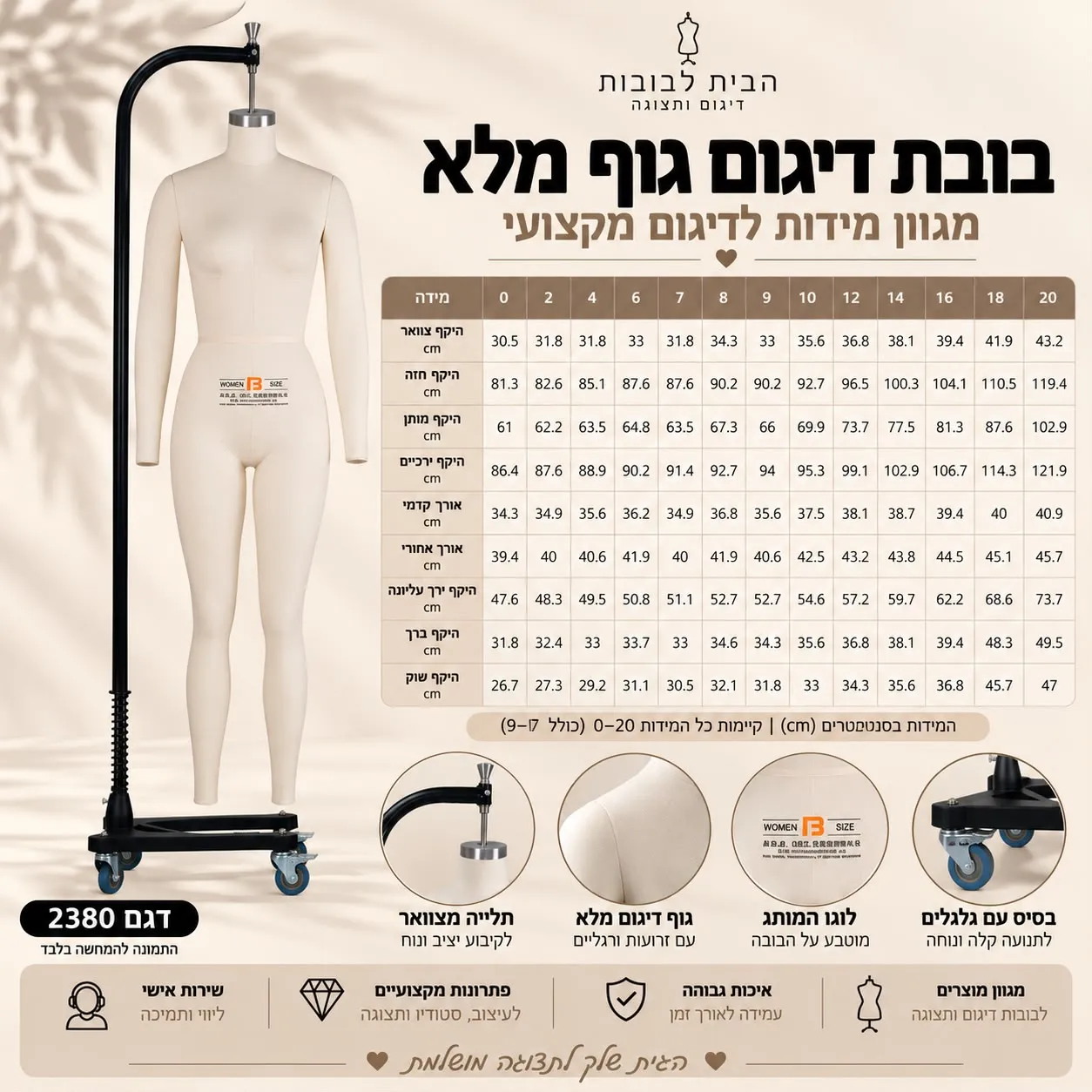
An anatomical body in a single size, usually European sizes 36 to 48. A stable, uniform body with no gaps, which makes it the easiest for pinning and draping. Ideal for anyone who works mainly in one size, for students and for beginners.
Adjustable Dress Form
The body is made of sections that move using adjustment dials at the bust, waist, hips, neck and back length. Each form covers a range of about 3 to 4 sizes – for example a bust of 112 to 127 cm in the L model. It is the solution for a dressmaker who fits clothes for clients of different sizes, and one form replaces several fixed ones.
Dress Form with Hips and Extended Torso
A form whose body extends down to mid-thigh. It lets you work on skirts, dresses and trousers with a correct waist and hip line, not just on blouses and jackets.
Dress Form with Collapsible Shoulders and Hem Cage
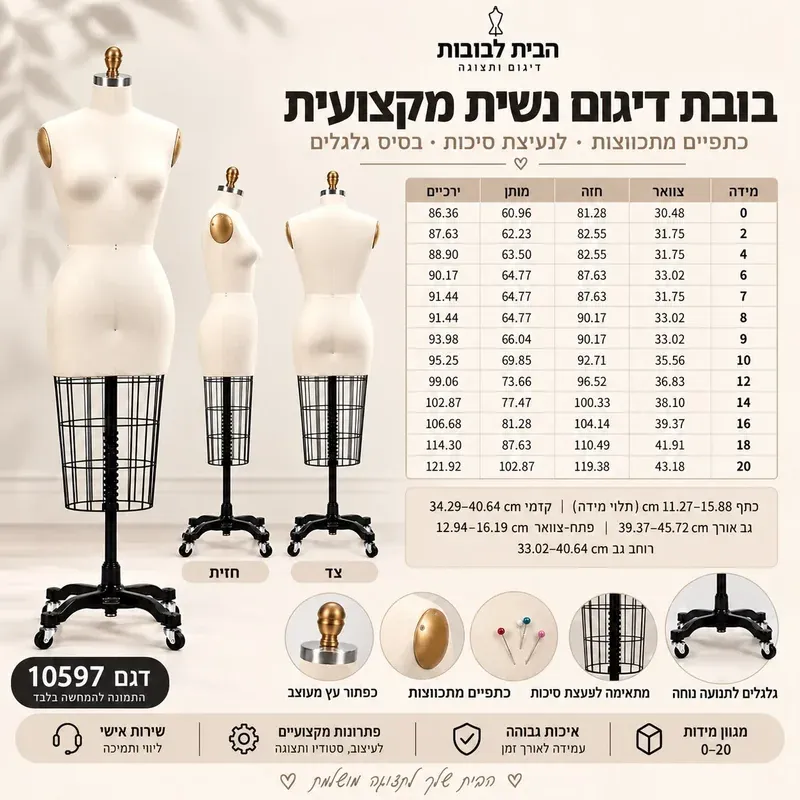
On professional models the shoulders fold inward, so you can put on and take off a close-fitting garment without straining the seams. The metal cage at the bottom of the form helps mark an accurate hemline on skirts and long dresses.
By Gender and Age
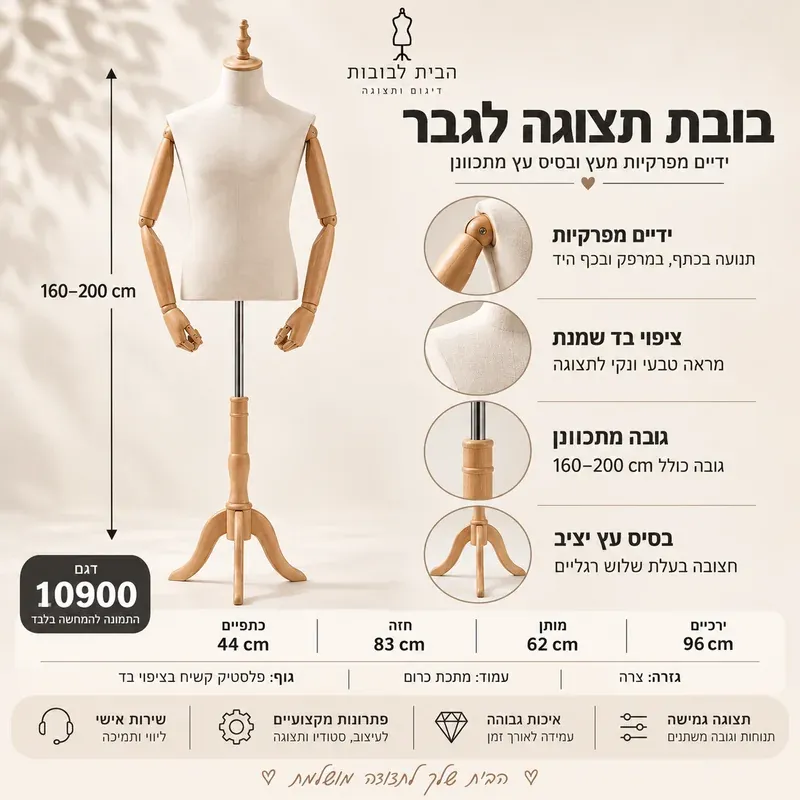
Alongside women's dress forms there are men's dress forms for tailoring suits, blazers and shirts, and children's dress forms for sewing children's clothing and costumes.
How to Choose a Dress Form
Size
Measure your bust, waist and hips, and choose the form according to the smallest size of the three. You can always pad a form to enlarge it in a particular area, but you can never make it smaller. With an adjustable form, make sure all three measurements fall within the model's adjustment range.
Adjustment: Fixed or Adjustable
When you expand an adjustable form, gaps open up between the sections. This does not affect the work, but when pinning, insert the pin at an angle into the padding rather than into the gap. If you mostly drape in one size, a fixed form will serve you better; if you fit clothes for different clients, an adjustable form is the better choice.
Cover and Padding
A quality dress form has a foam layer beneath the fabric cover, so you can pin into it again and again without tearing the cover. A neutral cream-colored cover lets you see the fabric and marking lines clearly.
Base and Stand
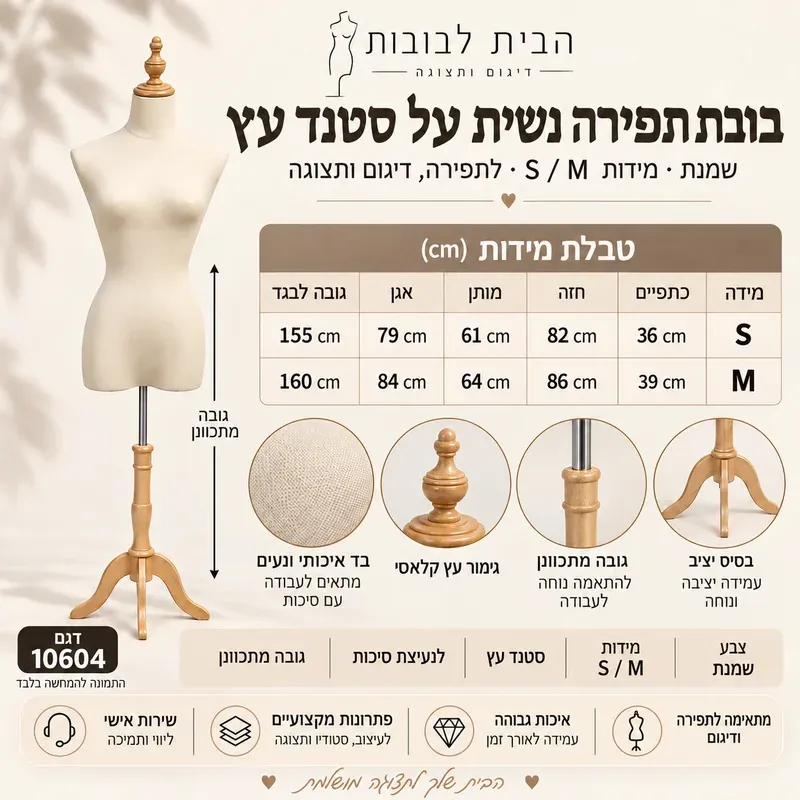
A three-legged wooden stand suits home use and a sewing corner. A metal base with casters suits a studio, since it makes it easy to move and turn the form while you work. In every case, choose a height-adjustable pole so you can work comfortably on the hemline too.
You'll find a detailed explanation in our guide to choosing a dress form.
Dress Form or Display Mannequin
A dress form is padded and made for work: you pin into it, measure and fit garments. A display mannequin is usually made of fiberglass or rigid plastic and is designed to show clothes in a shop window and in-store. For in-store display, choose from our display mannequins.
Who Our Dress Forms Are For
Dressmakers and tailors who fit clothes for clients
Fashion designers developing collections and sample garments
Fashion design students and sewing schools
Garment workshops and clothing manufacturers
Photographers and online stores that photograph clothes on a body
Wholesale for Studios, Schools and Chains
We also supply dress forms in bulk to studios, fashion schools, colleges and garment workshops. Wholesale orders can get custom pricing, advice on choosing sizes for a class or production line, and consolidated shipping. For details, contact us.
Complementary Equipment for Working with a Dress Form
To complete your workspace, add tape measures, sewing accessories such as pins and pincushions, and pressing hams for precise pressing of curved seams. To protect finished garments there are dress and suit covers. You'll find all your work equipment in the sewing supplies category.
Nationwide Shipping
Our forms ship throughout Israel in protective packaging. Information on delivery times and returns is on the Shipping and Returns page. Our store is located at 15 Kfar Giladi Street, Tel Aviv.
Related guides:
Frequently asked questions
What is the difference between an adjustable dress form and a fixed-size dress form?
A fixed-size form is built in one size, its body is uniform and stable, and it is especially comfortable for draping and pinning. An adjustable form is built from parts that move with adjustment dials at the bust, waist and hips, and covers a range of about 3 to 4 sizes. A fixed form suits someone who works in one size, and an adjustable form suits a seamstress who fits garments for clients in different sizes.
How do I know which size of dress form to buy?
Measure bust, waist and hip circumference, and choose according to the smallest size of the three. A form can be padded and enlarged in certain areas, but it can't be made smaller. With an adjustable form, make sure all three measurements fall within the model's adjustment range.
Can pins be stuck into a dress form?
Yes. Dress forms are padded with a foam layer and covered with fabric, and you can stick pins into them again and again. On an adjustable form that has been expanded, it's best to stick the pin diagonally into the padding and not into the gap between the parts.
What is the difference between a dress form and a display mannequin?
A dress form is a work tool: it is padded, you can stick pins into it, and it is used for measuring, draping and fitting garments. A display mannequin is usually made of fiberglass or rigid plastic, and is intended for displaying garments in a store and shop window. You cannot stick pins into it and it is not suitable for sewing work.
Can I buy dress forms wholesale for a studio, a college or a store?
Yes. We supply dress forms in quantities to studios, fashion schools, colleges, sewing workshops and stores, at a tailored price and with advice on choosing sizes. We deliver nationwide, and the store is at Kfar Giladi 15 in Tel Aviv. For details, contact us by phone or on WhatsApp at 055-2473993.
How do you pad a dress form to a client's measurements?
Attach thin layers of batting or fleece in the areas where the client is wider than the form, and put a snug fabric cover over them. A dress form can be enlarged with padding, but it can't be made smaller, so between two sizes choose the smaller one.
What is draping and how do you do it on a dress form?
Draping is building a pattern directly on the form. Place plain cotton fabric on the body, secure it with pins along the body lines, and mark seam lines and darts. Then take the fabric off and transfer the markings to pattern paper.
What height should a dress form be set to?
Set it so that the form's shoulder line is at the height of the customer's shoulders. This way the garment length and the hem are checked as they would be on the body. For hem work, you can lower the form to a comfortable seated height.
How do I take care of a dress form?
Cover it when you are not working on it, remove the pins at the end of the work, and clean light stains with a damp cloth and mild soap without soaking the body.
Is a dress form also suitable for beginners?
Yes. The form lets you see how the garment sits on a body, mark adjustments with pins and fit without a client. Beginners usually start with a fixed-size form that is close to their own measurements.