Plastic Garment Bags for Clothes on Hangers: Thickness, Length and Business Use

How to use plastic garment bags for clothes on hangers in a dry cleaner, sewing workshop or store: what 8-micron thickness means, which sizes to stock, handover, shipping, and why not to store garments in them long-term.
Plastic garment bags for clothes on hangers are a thin layer of protection against dust and dirt for the time between finishing work on a garment and the moment the customer hangs it in the wardrobe. Dry cleaners, dressmakers, tailors and shops use them for handover, transport and hanging stock. You choose a bag by the length of the garment on the hanger, understand that an 8-micron thickness suits short-term use rather than storage, and move a garment that will be kept for months into a breathable fabric cover. This guide covers the practical side: which range of sizes to keep in your business, how to cover, tag and hand over, and what to tell the customer when the garment goes out the door.
What a plastic garment bag is, and what it does
The bag is made of polyethylene (PE), the same material as the familiar dry-cleaning bags used worldwide. In most cases it is low-density polyethylene (LDPE), marked with recycling code 4. The bag has a top opening for the hanger hook and is open at the bottom. It has no zipper and no handles, so you can cover a garment in seconds.
What it gives your business: protection from dust and handling, a clean, tidy look at handover, and quick identification of the garment through the clear plastic. What it does not give: full closure, durability for repeated use, or ventilation. That is why it is a tool for handover and short periods, not a storage solution.
If you are still deciding between a PE bag, a PEVA cover and a non-woven fabric cover, the full comparison of materials is in the guide Dress and Suit Covers: How to Choose Material, Length and Depth. Here we focus on everyday use of PE bags in a business.
Plastic garment bag thickness: what 8 microns means
Plastic film thickness is measured in microns, i.e. thousandths of a millimeter. Our clear plastic bags for clothes on hangers are 8 microns thick, i.e. 0.008 mm. In English-language literature and catalogs, thickness usually appears in mils, thousandths of an inch. One mil equals 25.4 microns, so 8 microns is about 0.31 mil.
To put the number in context: American dry-cleaning suppliers sell garment bags on rolls at 0.35 mil for suits and dresses (about 9 microns), 0.5 to 0.6 mil in gusseted series (about 13 to 15 microns), and 0.75 mil for heavier bags (about 19 microns). An 8-micron bag sits at the thin end of that range, the end intended for quick covering and handover.
What thickness changes: a thicker bag is more resistant to tearing at hanger corners, on rack hooks and when carried, and looks stiffer. A thin bag is lighter, takes up less space at the station and suits a business that covers many garments a day.
What thickness does not change: polyethylene does not breathe at any thickness. A thick bag does not turn plastic into a material suitable for long-term storage; it only holds up better along the way.
Which range of sizes to keep in your business
Our bags come in five sizes, width by length. The measuring rule is the same for any cover: measure from the top of the hanger to the hem of the garment and add about 10 cm. What varies from business to business is which garments pass through the station, and therefore which sizes need to be within reach.
75×45 cm: the wide, short bag. For children's clothing and garments folded over a hanger. Suits children's clothing stores and dry cleaners that take in family laundry.
60×90 cm: button-down shirts, blazers and jackets. The size a dry cleaner that handles lots of shirts will use more than any other.
60×100 cm: long jackets, suits and hanging trousers. A useful size for tailors and alteration shops.
60×120 cm: a full suit on one hanger, a knee-length dress and a short coat.
60×140 cm: long coats and maxi dresses. For an evening or wedding dress longer than this, move to a 180 cm cover from the Dress and Suit Covers category.
A 60 cm width fits a standard adult hanger. If more coats reach the station in winter, increase the quantity of 60×120 and 60×140 accordingly.
Using plastic garment bags at the dry cleaner, the sewing workshop and the store
The workflow at the handover station
Check that the garment is completely dry and cooled. A garment still warm from pressing or damp from washing creates condensation inside the plastic.
Hang it on a hanger that suits the garment. The bag protects from dust, but the hanger is what keeps the shape of the shoulders. For high-volume stations, plastic hangers with a swivel hook are a good fit.
Choose the size by the length of the garment on the hanger, not by the type of garment alone.
Pass the hook through the top opening and pull the bag down, without dragging it over buttons or stones.
Attach the customer ticket to the neck of the hanger, above the bag, so it can be read without removing the plastic.
One garment per bag. A suit on one hanger counts as one garment.
In the sewing workshop and studio
At a dressmaker's or tailor's, garments in progress sometimes wait several days between fittings. A clear bag keeps them safe from dust and from the thread scraps and tailor's chalk that float around the workroom, and every garment can be identified from the outside without opening it. It is worth writing the date of the next fitting on the ticket as well, so the rack stays arranged in order of work.
In the store and the stockroom
In a store, the bag protects hanging stock in the stockroom and racks of items waiting for alteration or pickup. You can see the style and color through it, and there is no need to open it to find a size. For items that carry over between seasons and stay in the stockroom for months, it is better to switch to a breathable cover.
Plastic garment bags for deliveries and customer handover
When delivering from the business to the customer, the bag protects the garment from dust and handling during loading and lets the driver identify each garment. A few practical rules:
Lay or hang the garments so the bags are not stretched over sharp corners, because a thin bag tears there first.
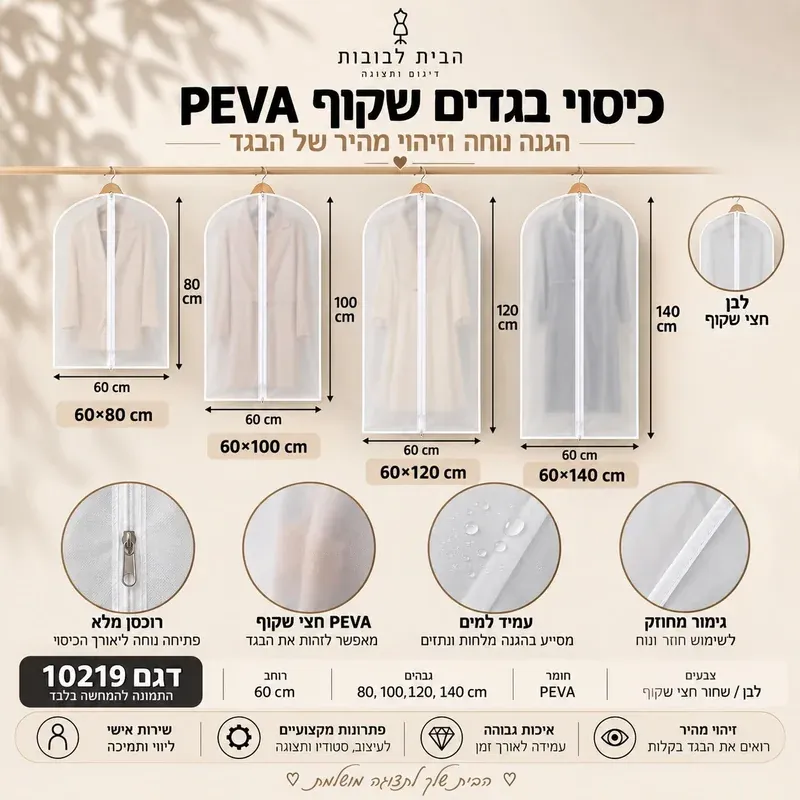
The bag is open at the bottom, so it does not seal the garment against rain or dirt from the floor. For repeated deliveries and travel, a closed cover is the right choice, such as the semi-transparent PEVA cover with a full zipper, available in lengths of 80 to 140 cm.
Tell the customer to remove the bag when they get home. This is the accepted recommendation worldwide as well: the dry-cleaning bag is meant for the journey, and leaving garments in it for a long time can cause yellowing.
Why not to store clothes long-term in a plastic bag
Guidelines from textile conservation institutions are consistent on this. The University of Nebraska storage guide explains that plastic does not allow air circulation, that moisture trapped inside a closed bag can cause mold, and that plastic attracts dust because of static electricity. Te Papa museum in New Zealand recommends not storing textiles in plastic, and covering each hanging garment with an individual cover made of fabric rather than plastic.
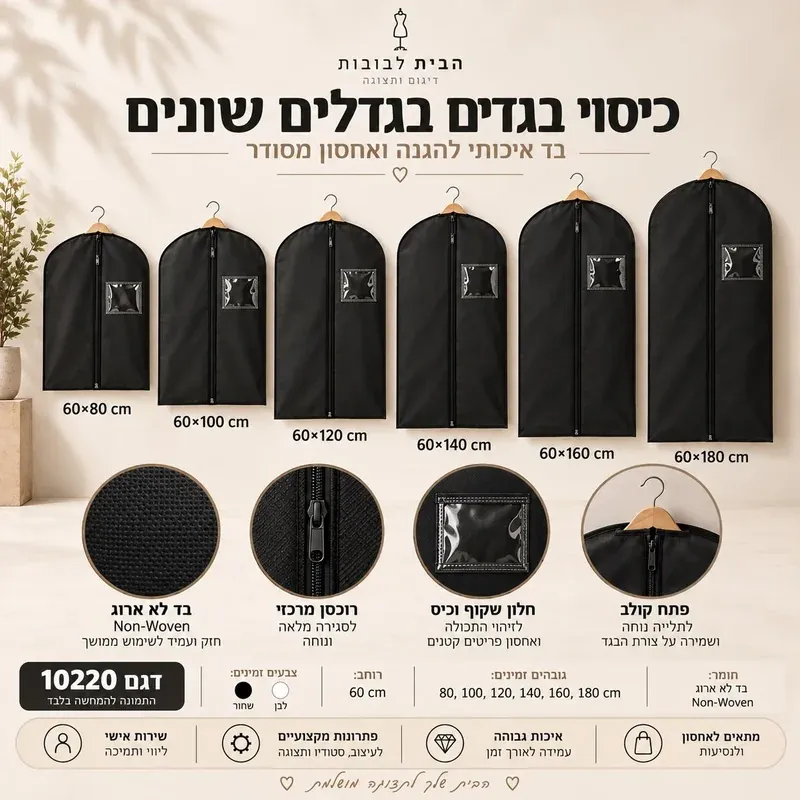
In practice, at home or in a store's stockroom, the meaning is simple: the PE bag is for days and weeks. For a garment kept for a whole season, especially wool, silk and cotton, switch to a non-woven fabric cover with a zipper and an ID window, which comes in six lengths from 80 to 180 cm.
Safety and recycling
Safety: a thin plastic bag is dangerous to babies and young children because of the risk of suffocation. At a handover station where children are around, keep the bags out of their reach, and remind customers to throw the bag away after removing it from the garment.
Recycling: dry-cleaning bags are made of LDPE with recycling code 4. Thin film of this type is usually not collected in regular recycling, which is why many dry cleaners abroad collect bags from customers at the counter. Before passing a bag on for recycling, remove hangers and tickets from it.
In summary: a bag for every garment, and a switch to a breathable cover when needed
Plastic garment bags are a simple work tool: a selection of a few sizes at the station, a dry garment on a suitable hanger, a ticket above the bag, and a short explanation to the customer that the bag is for the journey only. You will find all the covers, from the thin bag to breathable, durable covers, in the Dress and Suit Covers category. For businesses that need regular quantities and a mix of sizes, contact us by phone or WhatsApp for a wholesale quote.
Frequently asked questions
How much is 8 microns in mils?
One mil equals 25.4 microns, so a bag 8 microns thick is about 0.31 mil, or 0.008 mm. That is a thin gauge, similar to the bags dry cleaners use to cover suits and dresses at pickup.
Does a thicker plastic garment bag protect clothes better over time?
No. Greater thickness adds resistance to tearing and carrying, but polyethylene doesn't breathe at any thickness. For storage over months, a non-woven fabric cover that lets air through is the right choice.
When should you take a garment out of the bag after collecting it from the dry cleaner?
As soon as you get home. The bag is meant to protect the garment on the way, and leaving clothes in a plastic bag for a long time can cause yellowing. If the garment needs protection in the closet, move it into a breathable fabric cover.
Where should the customer's ID tag be attached?
On the neck of the hanger, above the bag. That way you can read the name or number without removing the plastic, and the tag doesn't stick to the garment itself. When you discard or recycle the bag, remove the tag first.
Can several hangers go into one plastic garment bag?
One garment per bag is best. Several hangers in one bag crush the clothes, add creases and make identification harder. A suit hanging on one hanger counts as one garment, and the 60×120 cm size usually suits it.
Does a plastic garment bag protect against rain during delivery?
Only partially. The bag is open at the bottom, so water and dirt can reach the hem of the garment. For repeated transport or a long journey, a closed PEVA cover with a zipper is the right choice.
How do you recycle plastic garment bags?
These bags are usually made of LDPE, recycling code 4. Thin plastic film is often not collected in regular recycling bins, so check for a plastic film collection point in your area. Before recycling, remove hangers and tags.
Why does the plastic bag over the garment attract dust?
Plastic builds up static electricity, so dust clings to its outside. The dust stays on the bag rather than on the garment, but it is one more reason to replace an old bag and not leave a garment in the same bag for months.
Which bag sizes should a dry cleaner keep at the pickup counter?
Usually 60×90 cm for shirts and jackets, 60×120 cm for suits and knee-length dresses, and 60×140 cm for long coats. A dry cleaner that takes children's clothing will also add 75×45 cm. When more coats come in, increase the quantity of the long sizes.
How long should you wait after pressing before covering a garment with a bag?
Until the garment has cooled and dried completely. A warm or damp garment put into plastic creates condensation inside the bag, and the moisture stays on the fabric. At a busy station, hang the pressed garments on an open rail and cover them only just before handover.