הבית לבובות דיגום ותצוגה
Universal Pressing Ham on 40 cm Wooden Stand – White Padded Roll for Shoulders and Sleeves
In stock
SKU: 10862
Product description
Universal pressing pad on a stand: a pressing cylinder that stands in the air
The universal pressing pad is a padded cylinder 21 cm long and 14 cm thick, attached at one side only to a vertical wooden stand 40 cm high. The other side of the cylinder is free, and that is what distinguishes it from a regular pressing pad: you slide a sleeve, a child's trouser leg or the shoulder of a jacket onto it, and the garment hangs around the pad and isn't pressed against the table.
The height changes the work. The pad sits 40 cm above the table, so large parts of the garment, such as the body of a dress or the back of a coat, stay hanging below and aren't dragged across the surface. A wooden base measuring 23 by 16 cm keeps the stand stable even when you press with the iron on the open end.
The cover is made of a quality, pleasant white fabric, and the end of the cylinder is rounded. This way you can shape a sleeve cap, a shoulder line or a curved seam without leaving a corner line on the fabric.
How this model differs from our other pressing pads
Universal pressing pad on a tall stand (the model on this page): A cylinder 21 cm long and 14 cm thick, at a height of 40 cm, with an open end. Intended for short, rounded, three-dimensional areas: sleeve caps, shoulders, collars and children's garments.
Long sleeve board on a wooden stand: About 56 cm long and 15 cm high, for pressing a whole sleeve or a trouser leg in one go.
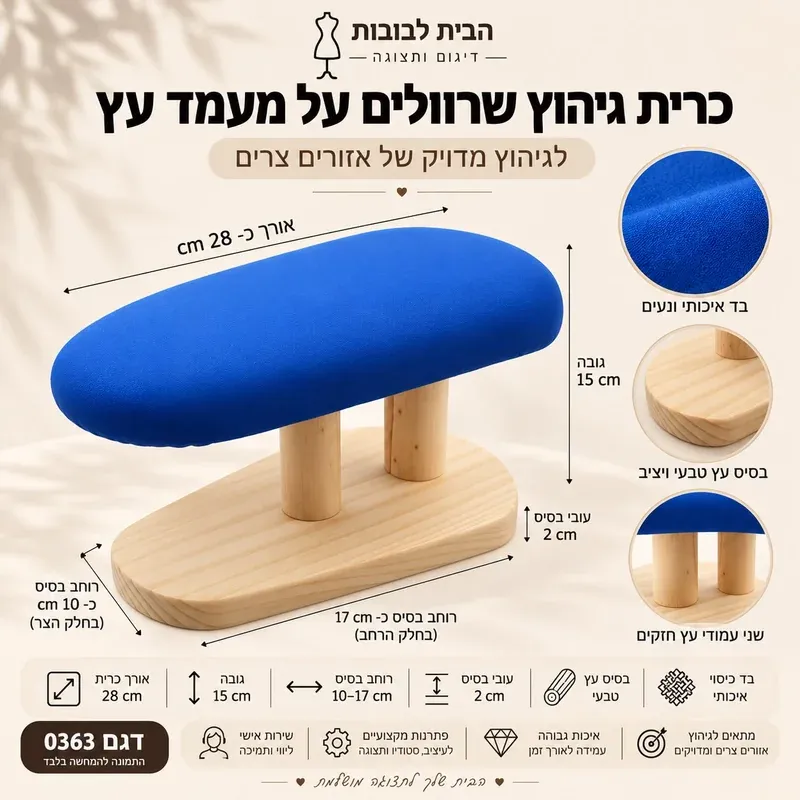
Compact sleeve board on two posts: About 28 cm long and 15 cm high, for cuffs, sleeve ends and short hems.
Common uses
Shaping a sleeve cap and pressing the seam that joins the sleeve to the body of the garment
Shoulder line in jackets, coats and dresses, after sewing or after taking in
Short sleeves and sleeves of children's and babies' garments, slid onto the open end
Collars, lapels and button plackets
Puff sleeves, corset seams and rounded areas at the chest and waist
Hats, small bags and three-dimensional items that don't lie flat
Spot pressing of one area in a finished garment, without pressing all of it again
Who the pad is for
Seamstresses and fashion designers: For in-between pressing between sewing stages, especially in sleeves and shoulders
Tailors and clothing repairers: For shoulder alterations and sleeve repairs, where you need to press one area without touching the rest of the garment
Evening and bridal gown studios: For corsets, short sleeves and areas that must not be crushed
Children's clothing seamstresses: For narrow sleeves and legs that don't fit on a regular board
Fashion design schools and sewing classes: Equipment for every work station; for bulk orders you can contact us
Professional tips for working with a pressing pad on a stand
Slide on from the open end: Put the sleeve or the shoulder onto the cylinder from the free side, so the area you're pressing sits on the rounded part.
Press and lift, don't slide: On a sleeve cap and a shoulder, lower the iron, press, lift and move to the next spot. Sliding stretches the fabric and distorts the line.
Shape with steam: The steam softens the fabric and lets it take the curve of the cylinder. After steaming, hold the fabric in shape until it cools.
A pressing cloth for delicate fabrics: With satin, silk and dark fabrics, place a thin pressing cloth between the iron and the garment.
Stand it on a stable surface: The whole base sits on the table, and the open end of the pad faces you.
Keep the white cover clean: Don't press fresh prints or fabric that may bleed on it, and wipe water drops off the wood at the end of the work.
Common mistakes and how to avoid them
Pressing a sleeve cap on a flat board: The curve is flattened and small folds form along the seam. On a rounded cylinder the fabric keeps the shape in which it was sewn.
A garment dragging on the table: When the pad is low, the heavy parts of the garment pull the area you're pressing. On a stand 40 cm high they stay hanging below.
Pressing the visible side before opening the seam: First press open the seam allowances with the tip of the iron, and only then press the visible side.
Too much heat on delicate fabric: Test the temperature on a scrap of the same fabric before pressing the garment itself.
Images are for illustration only; slight color differences may occur between different screens.
Specifications
Product type: Universal pressing pad on a wooden stand
Model: 10862
Brand: HaBayit LaBubot
Pad length: 21 cm
Pad thickness: 14 cm
Total height: 40 cm
Base dimensions: 23 × 16 cm
Construction: Padded cylinder on a vertical wooden stand, one open end
Pad shape: Cylindrical, with a rounded end
Base and stand material: Wood
Cover: Quality fabric
Cover color: White
Sold as: Per unit
Frequently asked questions
Frequently asked questions
What are the dimensions of the universal pressing pad?
The pad is a cylinder 21 cm long and 14 cm thick, and the total height of the stand is 40 cm. The wooden base measures 23 by 16 cm.
What is a pressing pad on a tall stand used for?
For pressing and shaping short, curved areas that do not lie flat: sleeve caps, shoulder lines, collars, puff sleeves, short sleeves and children's clothes. The 40 cm height leaves the rest of the garment hanging below the pad.
What is the difference between a pressing pad on a stand and a tailor's ham?
A tailor's ham rests on the table, and you lay the garment over it. Here the cylinder is raised on a stand and one end of it is open, so you slide a sleeve or a shoulder onto it and the garment hangs around it. A tailor's ham is more convenient for wide rounded areas such as the bust and the hip, and the pad on a stand is more convenient for closed parts such as a sleeve.
What is the pressing pad made of?
The stand and base are made of wood, and the padded cylinder is covered with a quality, pleasant fabric in white.
Can I press a long sleeve on it?
You can press a long sleeve in sections, but the pad is intended mainly for the sleeve cap and short areas. For a whole sleeve in one pass, a long sleeve pressing pad, about 56 cm long, is more suitable.
Why is the 40 cm height important?
The height lets the garment dangle freely below the pad, so you can press a shoulder or a sleeve without the lower part of the garment creasing on the table.
Can I iron on it with steam?
Yes. Press with steam and leave the fabric on the roll until it cools slightly, so the shape sets.
Which parts of a garment are convenient to press on the pad?
Shoulders, sleeve caps, long sleeves, curved seams and dart areas - parts that distort when you try to press them on a flat board.
How do you keep the white cover clean?
Press only clean, dry garments, clean the iron's soleplate of starch residue, and use a pressing cloth when working with dark fabrics or with fusible interfacing.
Can I order several pads for a studio or a sewing school?
Yes. For bulk orders you can contact us.