הבית לבובות דיגום ותצוגה
Elongated Pressing Ham on Wooden Post – 31 cm, Tapered Shape, White Cover
In stock
SKU: 10861
Product description
Long pressing pad: a wide end and a narrow end in the same pad
A long pressing pad is a padded cushion 31 cm long, raised on a single wooden post above a rounded wooden base. The pad is not uniform along its length: one side is wide and tall, and the other side narrows to a narrow, rounded end. This way the same pad serves two kinds of work. On the wide side you press a sleeve cap, a shoulder line and the chest area of a jacket, and on the narrow side you get into cuffs, children's sleeves, collars and small openings.
The total height is 22.5 cm. The single post is in the center and leaves an open space on both sides, so you can slip a sleeve or a trouser leg on from any direction and turn it around the pad without the garment catching on a second post. The base is 30.5 cm long and 9.5 cm wide, with rounded ends, and sits stably on the sewing table or on a regular ironing board.
The cover is made of a quality, pleasant white fabric that allows smooth pressing. The rounded lines of the pad let you press curved seams without leaving a corner mark on the fabric.
How this model differs from our other pressing pads
Long pressing pad (the model on this page): A tapered pad 31 cm long on a single wooden post, with a total height of 22.5 cm. Two widths in one pad, and an open passage on both sides of the post.
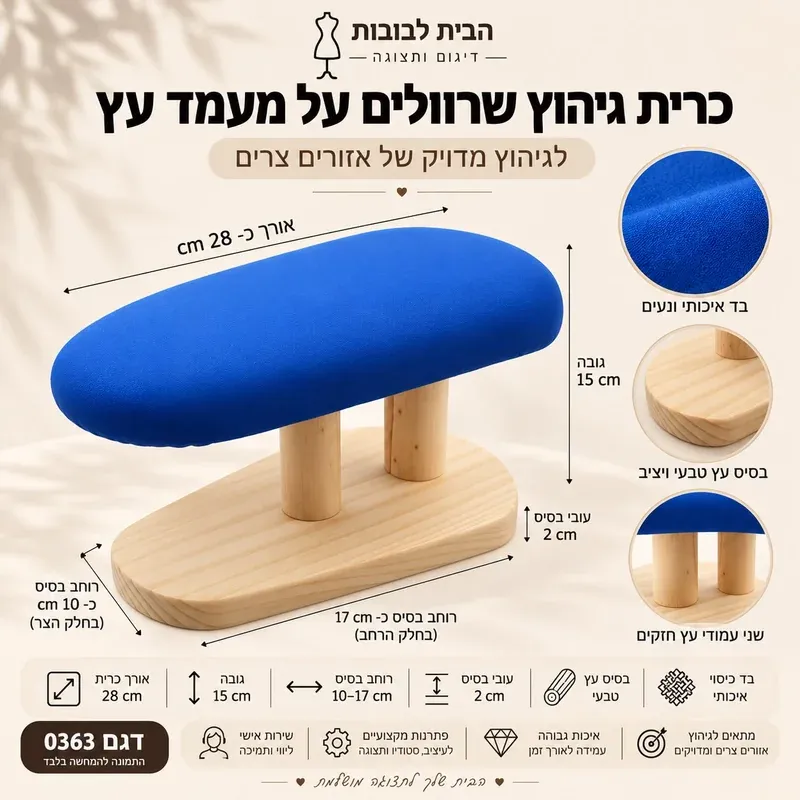
Compact sleeve board on two posts: About 28 cm long and 15 cm high, of uniform width, for cuffs and sleeve ends.
Long sleeve board on a wooden stand: About 56 cm long and 15 cm high, for a whole sleeve or a trouser leg in one go.
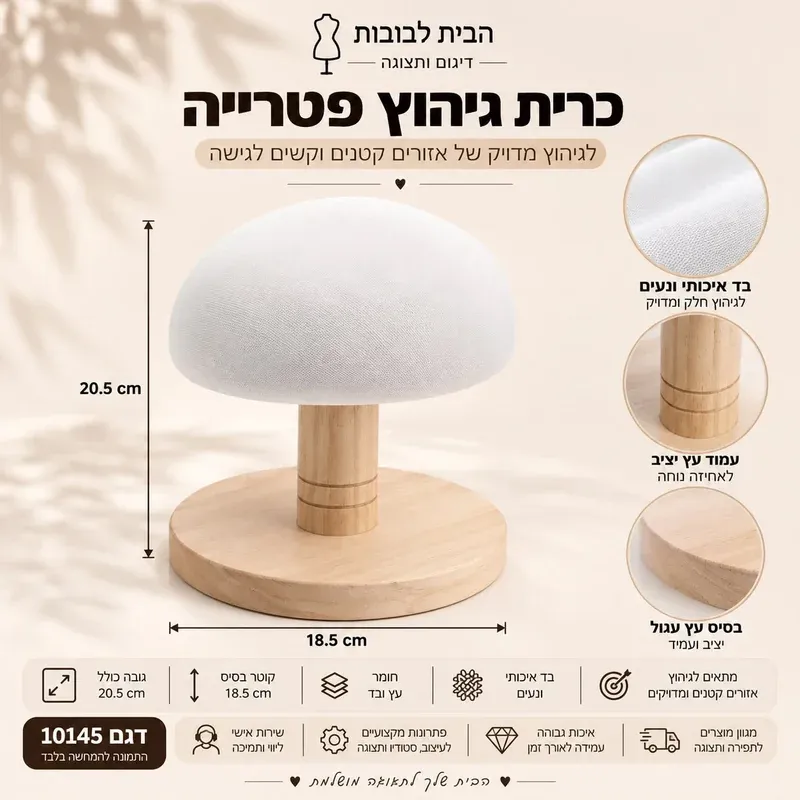
Universal pressing pad on a tall stand: A 21 cm long cylinder on a stand 40 cm high, with an open end, for sleeve caps and shoulders while the garment hangs below.
Common uses
Sleeve cap and shoulder line, on the wide side of the pad
Cuffs, sleeve ends and children's garment sleeves, on the narrow side
Pressing open curved seams: princess seams, sleeve-setting seams and puff sleeves
Collars, lapels and button plackets
Seams in sleeves and narrow trouser legs, turning them around the pad
Spot pressing of a finished garment before handing it to a customer or before a photo shoot
Who the pad is for
Seamstresses and designers: One pad for two kinds of areas, for work next to the machine
Tailors and clothing repairers: For jackets, coats and sleeve repairs
Evening and bridal gown studios: For curved seams in delicate fabrics
Children's clothing seamstresses: The narrow end fits into small sleeves
Fashion design schools and sewing classes: Equipment for every work station; for bulk orders you can contact us
Professional tips for working with a long pressing pad
Match the side to the curve: Place a wide, rounded area of the garment on the wide side, and a narrow area on the narrow side. When the curve of the pad is similar to the curve of the garment, the fabric isn't stretched.
Turn the pad, not the garment: The base is narrow and rounded, and it's easy to move on the table to bring the right side to you.
Press and lift, don't slide: On curved seams, lower the iron, press, lift and move to the next spot, so you don't stretch the fabric.
A pressing cloth for delicate fabrics: With satin, silk and dark fabrics, place a thin pressing cloth between the iron and the garment.
Keep the white cover clean: Don't press fresh prints or fabric that may bleed on it, and wipe water drops off the wood at the end of the work.
Common mistakes and how to avoid them
Sleeve cap on the narrow side: The curve is too small and folds form along the seam. Work on the wide side.
Pressing hard on the ends: The pad rests on a single post in the center, and pressing hard at the end shifts weight to one side. At the ends, press gently and hold the base with your other hand.
An iron that stays in place: On a padded surface the heat concentrates and may leave a shine or a mark. Keep the iron moving.
Pressing delicate fabric from the visible side: With delicate and dark fabrics, press from the inside of the garment or through a pressing cloth.
Images are for illustration only; slight color differences may occur between different screens.
Specifications
Product type: Long pressing pad on a wooden post
Model: 10861
Brand: HaBayit LaBubot
Pad length: 31 cm
Pad height: 18 cm
Support width: 11.5 cm
Total height: 22.5 cm
Base length: 30.5 cm
Base width: 9.5 cm
Construction: Tapered padded pad on a single wooden post
Base shape: Rounded
Base and post material: Wood
Cover: Quality fabric
Cover color: White
Sold as: Per unit
Frequently asked questions
Frequently asked questions
What are the dimensions of the long pressing pad?
The pad length is 31 cm, the pad height is 18 cm and the total height is 22.5 cm. The base is 30.5 cm long and 9.5 cm wide, and the support width is 11.5 cm.
Why is the pad wide on one side and narrow on the other?
So you can work on two types of areas on the same pad. The wide side suits a sleeve cap, a shoulder and the chest of a jacket, and the narrow side fits into cuffs, children's sleeves and collars.
What is the difference between a long pressing pad and a sleeve pressing pad?
A sleeve pad is a uniform width and is intended mainly for a whole sleeve along its length. The long pad tapers and stands on a single post, so it suits rounded areas and seams that change width better, such as where the sleeve joins the body.
What is the pressing pad made of?
The base and post are made of wood, and the padded pad is covered with a quality, pleasant fabric in white.
What surface do I place the pad on?
On any flat surface: a sewing table, a work table or a regular ironing board. The base is 30.5 cm long and its ends are rounded, so it is easy to move and rotate while working.
Which parts of a garment are convenient to press on the long pad?
Narrow sleeves, trouser legs, long seams, cuffs and children's clothes - parts that are hard to spread on a regular ironing board without creating a crease line.
Can I press on it with steam?
Yes. Press with steam and leave the fabric on the pad until it cools slightly, so the seam stays straight and flat.
Who is the pad suitable for?
For seamstresses, tailors and fashion studios, and also for home - for anyone who irons shirts and dresses with sleeves and narrow parts.
How do you keep the white cover clean?
Press only clean, dry garments, clean the iron's soleplate of starch residue, and use a pressing cloth when working with dark fabrics or with fusible interfacing.
Can I order several pads for a studio or a sewing school?
Yes. For bulk orders you can contact us.