
Tape Measures
Sewing tape measures for home sewers, tailors, fashion designers and students: flexible, accurate measuring tapes for measuring bodies, fabric and patterns, marked in centimeters and inches. A tape that doesn't stretch is the foundation of every accurate pattern. Retail and wholesale, pickup in Tel Aviv and delivery across Israel.
Products: 7
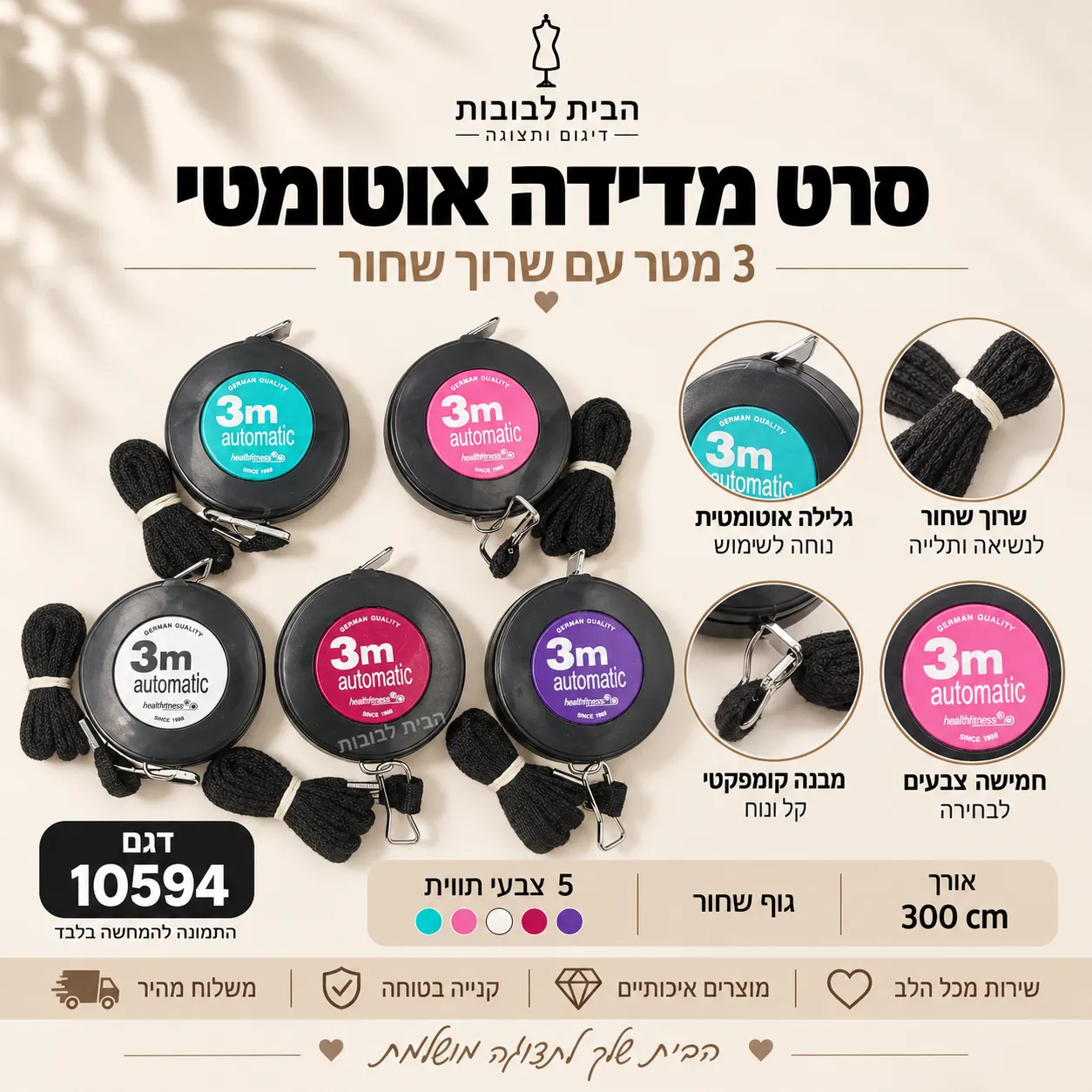
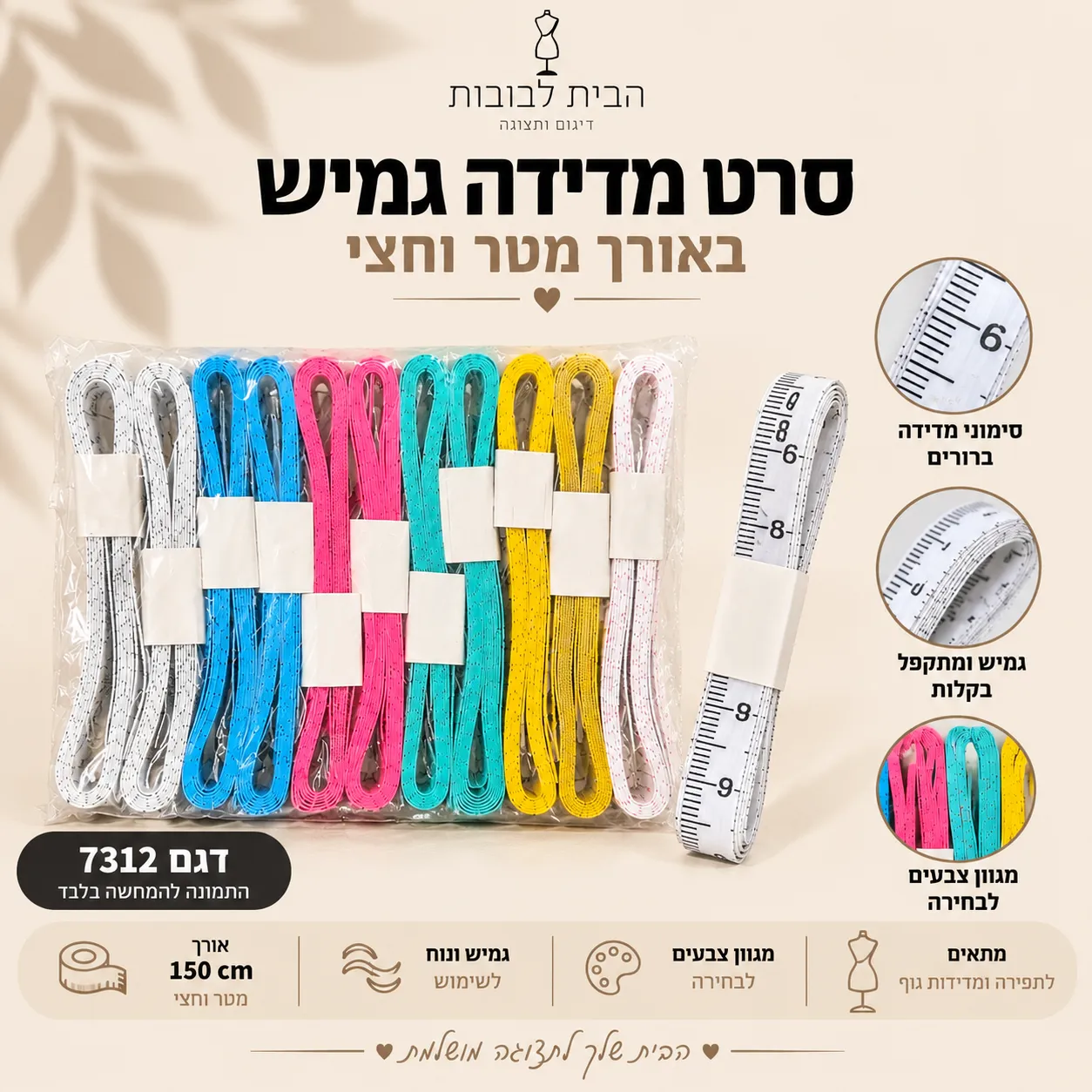
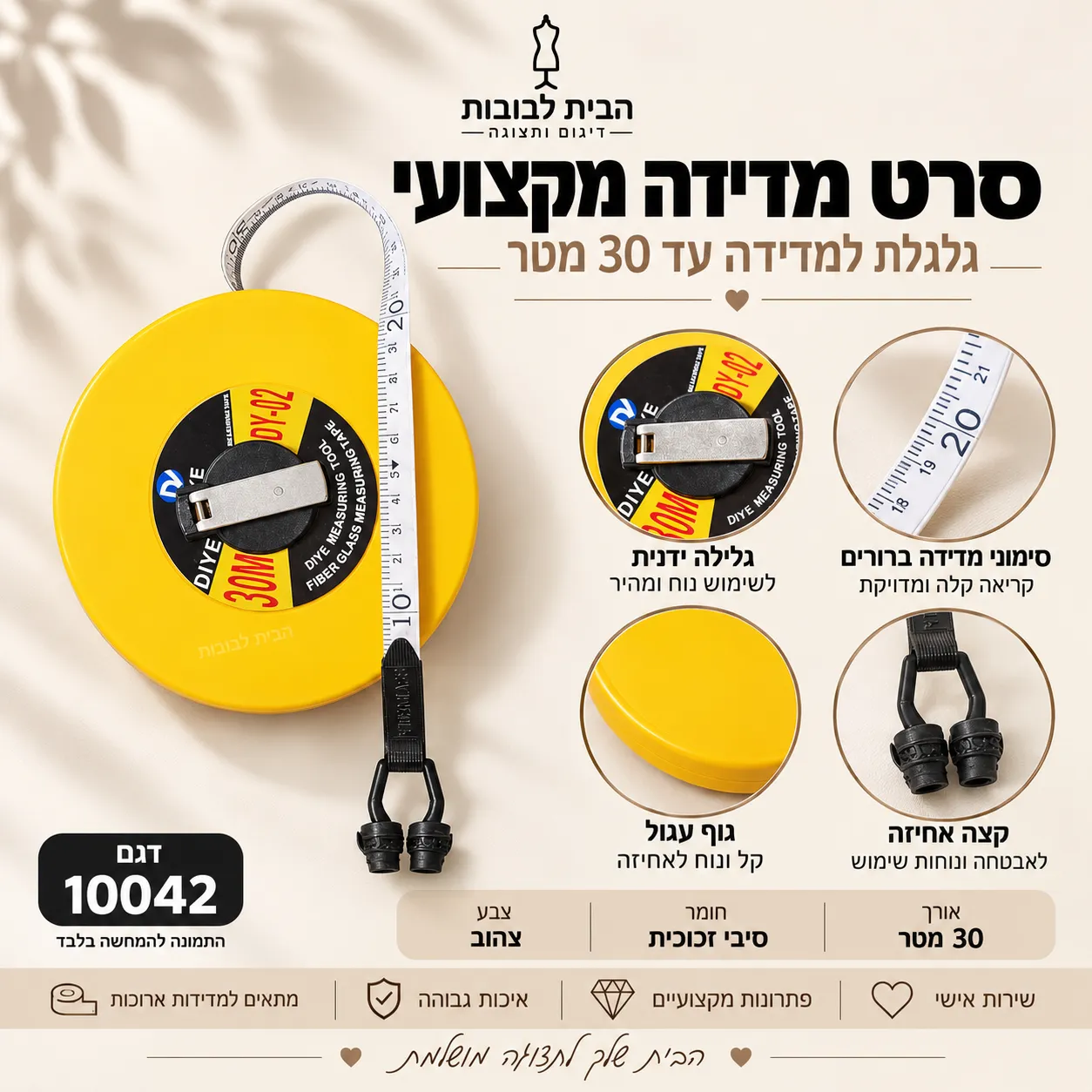
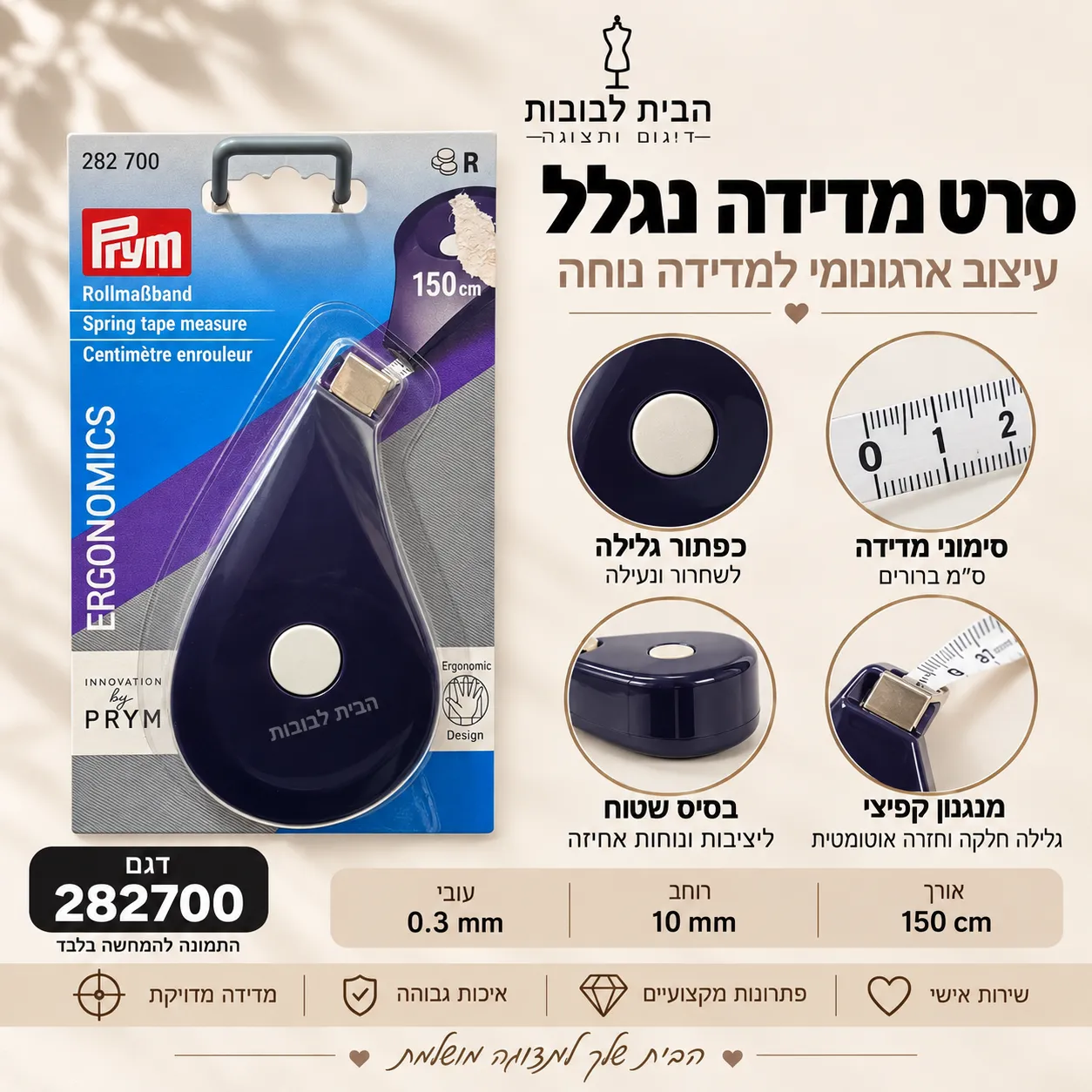


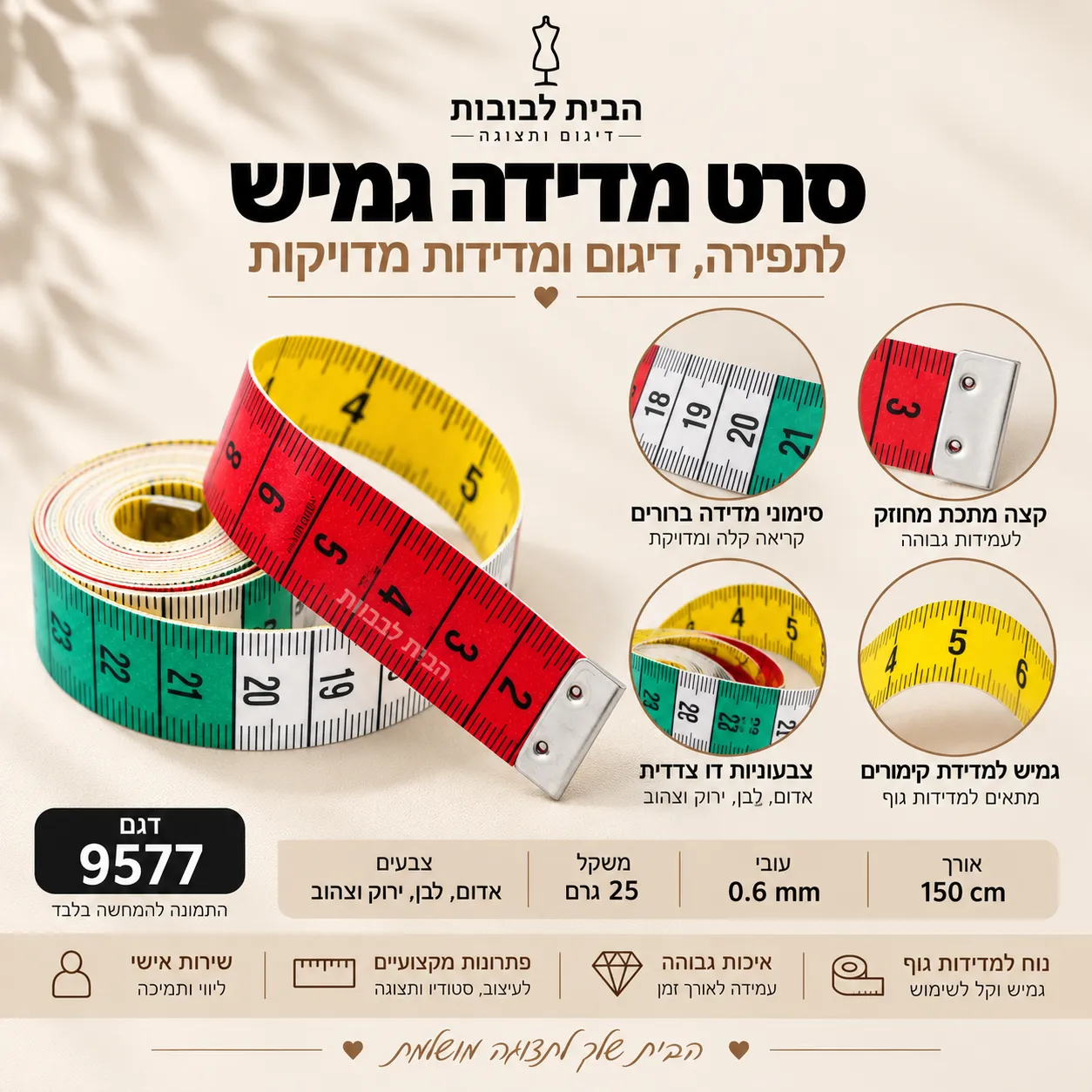
The Tape Measure: Where Every Pattern Begins
Every garment starts with a measurement. A tape measure is used to take body measurements, check fabric lengths and hems, measure curved pattern lines and compare the client's measurements with those of the dress form. Half a centimeter off on each measurement adds up to several centimeters in the finished garment, so the quality of the tape matters as much as the quality of the fabric.
Tape measures are part of our Sewing Supplies category, alongside sewing accessories for marking and pinning and pressing hams for finishing.
How to Choose a Sewing Tape Measure
Material: The Most Important Factor
Fiberglass: doesn't stretch or shrink, and stays accurate even after years of use. This is the professional choice.
Vinyl or soft plastic: flexible, pleasant to work with and fine for everyday use, but it may stretch over time and warp with heat.
Fabric: stretches with use and changes the measurement. Not suitable for precise work.
Length
150 cm (60 in.): the standard length. Enough for body measurements and most garment lengths.
300 cm (120 in.): for evening and wedding gowns, long coats, measuring fabric rolls and curtains.
Markings and Ends
Double-sided markings: centimeters and millimeters on one side and inches on the other, for working with both Israeli and international patterns.
Metal tips: give a fixed zero point and prevent wear at the start of the tape.
Clear numbers: sharp, high-contrast printing prevents reading errors, especially when working quickly with a client.
Loose Tape or Retractable Tape
A loose tape draped around the neck is the tailor's classic tool and is convenient for measuring bodies. A retractable tape in a case is compact, stays clean and is ideal for your bag or for work outside the studio.
How to Take Body Measurements for Sewing
Measure over underwear or a thin, close-fitting garment, with the body standing straight and relaxed. The tape should sit snugly against the body without pressing: one finger should fit underneath it. For circumference measurements, make sure the tape is parallel to the floor all the way around.
Bust: at the fullest point, under the armpits and across the shoulder blades.
Waist: at the narrowest point of the body. To find it, tie an elastic or string around the waist and let it settle.
Hips: at the fullest point, usually about 20 cm below the waistline.
Shoulder width: from shoulder tip to shoulder tip, across the back.
Back length: from the prominent vertebra at the nape of the neck to the waistline.
Sleeve length: from the shoulder tip, over a slightly bent elbow, to the wrist.
Write down each measurement right away, and measure the main measurements twice.
Pro Tips for Working with a Tape Measure
Measure curves with the tape on its edge: to measure an armhole, neckline or sleeve cap on a pattern, stand the tape on its narrow edge and follow the line. This lets you compare the sleeve cap length with the armhole length.
Check the dress form, not just the client: measure the dress form at the same points where you measure the body and adjust it to match. The full explanation is in our guide to choosing a dress form.
Don't iron near the tape: the iron's heat can warp a vinyl tape and wear off the printing.
Roll it, don't fold it: repeated folding at the same spot creates a crease that changes the measurement.
When to Replace a Tape Measure
Every few months, lay the tape next to a metal ruler and check that the measurements match along its entire length. A tape that has stretched or warped, whose numbers have worn off or whose metal tip has shifted is no longer fit for precise work. In a busy studio, it's worth keeping a spare.
Tape Measures for Designers, Studios and Sewing Schools
Tape measures are used when working on women's dress forms, men's dress forms and children's dress forms, as well as for measuring clients in studios and tailoring shops. HaBayit LaBubot also sells tape measures wholesale to sewing schools, fashion programs, workshops and stores. For a quote on larger quantities, reach out via Contact Us.
Pickup in Tel Aviv and Delivery Across Israel
You can order online and pick up free of charge from our store at 15 Kfar Giladi St., Tel Aviv, or have it delivered anywhere in Israel. Delivery times and return terms are detailed on the Shipping & Returns page.
Frequently asked questions
Which tape measure is best for sewing?
For sewing, a fiberglass tape measure 150 cm long is suitable, with markings in centimeters and inches and metal ends. Fiberglass does not stretch, so the tape stays accurate over time. For evening dresses, long coats and measuring fabric, it is worth adding a 300 cm tape.
What is the difference between a fiberglass tape measure and a plastic or fabric one?
Fiberglass does not stretch or shrink, and stays accurate even after long use. Vinyl or soft plastic is comfortable to work with, but may stretch over time and warp from heat. A fabric tape stretches with use and changes the measurement, so it is not suitable for professional work.
How do I properly measure bust, waist and hip circumference for sewing?
Measure over thin, fitted clothing, with the tape snug against the body but not tight, and parallel to the floor. Measure the bust at the widest point, the waist at the narrowest point, and the hips at the widest point, usually about 20 cm below the waist. These measurements are also used to choose or adjust the dress form, as explained in the guide to choosing a dress form.
When do I need a 3-meter tape measure?
A 300 cm tape is useful when measuring lengths that exceed 150 cm: wedding and evening dresses with a train, coats and maxi dresses, measuring fabric from a roll, and the circumference width of full skirts. For everyday work on the body and on a dress form, a standard 150 cm tape is enough.
How do you know the tape measure is no longer accurate?
Place the tape next to a metal ruler and check that the measurements are identical along the whole length. If there is a deviation, if the tape has stretched or curled, if the numerals have worn off or if the metal tip has moved, it's time to replace it. To extend its life, roll it up instead of folding it and keep it away from the heat of the iron.
Why does a tape measure have two sides?
Usually one side in centimeters and the other in inches. This is convenient when working with patterns or size charts from abroad.
How do you measure trouser length?
Measure the inseam, from the crotch to the ankle, on a pair of trousers that fits well or on the body. For the outseam, measure from the waistline to the hem.
How do you measure neck circumference?
Wrap a tape measure around the base of the neck and leave room for one finger between the tape and the body, so the collar won't be tight.
Why is a flexible tape measure better than a rigid ruler in sewing?
A flexible tape conforms to the curves of the body, for example at the bust or hips, and measures them accurately. A rigid ruler suits straight lines only.
How do you care for a tape measure?
Roll it up without stretching it, and keep it away from an iron and from a heat source. A stretched or folded tape loses its accuracy.