How to Take Body Measurements for Sewing: Bust, Waist, Hips and Lengths

A measuring guide for sewing: how to measure bust, waist and hips, back, sleeve and inseam lengths, what's different when measuring men and children, and how to use your measurements to choose a dress form.
To take body measurements for sewing, you need a flexible tape measure that doesn't stretch, thin clothing and someone to help. Measure with the tape snug against the body but not tight, straight and parallel to the floor, while breathing normally. The basic measurements are bust, waist and hips, and for tailored garments you add lengths: back, sleeve, shoulder and inseam. Each measurement is taken twice and written down right away. In this guide, you'll find how to take each one, the difference between measuring a woman and a man, and how to use the measurements to choose a dress form.
What You Need Before You Start
A flexible tape measure: fabric or fiberglass, at least 150 cm long, that doesn't stretch over time. A metal construction tape won't work, because it doesn't curve around the body.
An elastic or string to mark the waist: tie it around the waist before you start. It settles on its own at the narrowest point, and all lengths are measured from it.
Thin clothing: a tank top and leggings, or underwear. Jeans and a sweater add centimeters.
A helper and a mirror: most back measurements can't be taken accurately on your own.
Four Rules That Prevent Mistakes
Snug, not tight. The tape touches the body all the way around, but doesn't press. If you can just barely slip one finger underneath it, that's right.
Parallel to the floor. For circumference measurements, the tape should be at the same height in front and back. A tape that rides up at the back adds quite a bit to the measurement.
Stand normally. Don't suck in your stomach or puff out your chest. Breathe normally.
Measure twice. If there's a difference between the two measurements, measure again. Write each measurement down right away, with the date.
The Three Basic Measurements
Bust
For women: measure around the fullest point of the bust, wearing a regular bra. For men: under the armpits, around the widest part of the chest. In both cases the tape passes under the arms, which hang relaxed at the sides.
For tailored tops, also take the underbust: directly below the bust line, snug against the body.
Waist
At the narrowest point of the body, usually a few centimeters above the navel. This is where the elastic you tied settles on its own. If it's hard to find, bend slightly to the side: the crease that forms is the waistline.
Hips
Around the widest part of the seat, with the feet together. It's best to measure side-on in front of a mirror, to make sure the tape doesn't drop at the back. Sometimes a high hip measurement is also taken, higher up at the level of the hip bones, for low-rise pants.
Lengths and Measurements for Tailored Garments
Neck: around the base of the neck, where a shirt collar sits.
Shoulder width: across the back, from shoulder tip to shoulder tip, through the prominent vertebra at the base of the neck.
Shoulder length: from the base of the neck to the shoulder tip, at the point where the arm begins.
Back length: from the prominent vertebra at the base of the neck to the elastic at the waist.
Front length: from the side of the base of the neck, over the fullest point of the bust, to the waist.
Sleeve length: from the shoulder tip, over the elbow with the arm slightly bent, to the wrist bone.
Upper arm: around the widest part of the upper arm.
Inseam: along the inside of the leg, from the crotch to the ankle or to the floor, depending on the pant length.
Outseam: from the waist, along the outside of the leg, to the desired length.
Measuring Men
For men, the chest is measured under the armpits, and the pant waist is measured where the pants actually sit, usually lower than the natural waist. For a suit, add shoulder width, sleeve length and jacket length, from the base of the neck at the back to the desired length.
Measuring Children
Children move, so measure quickly, preferably over underwear, and repeat the measurements before every project. For young children, overall height is just as important as circumference measurements, because their size charts are based mainly on height.
From Measurements to Dress Form
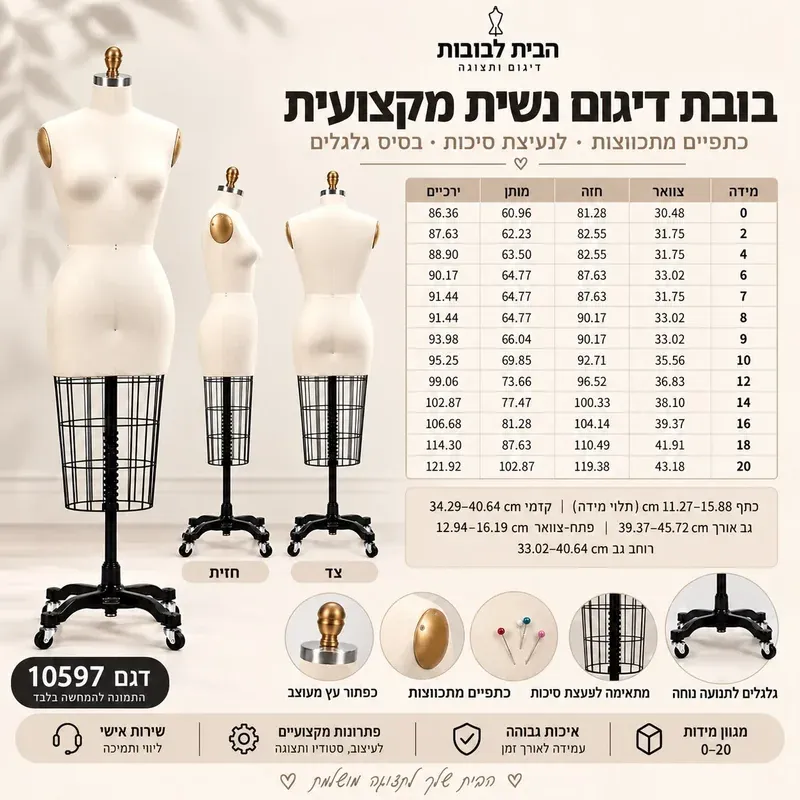
The three basic measurements, bust, waist and hips, are also what you need to choose a dress form. Compare them with the form's measurement chart, not with the size number on the label. When your measurements fall between two sizes, choose the smaller one and add padding. You'll find a full explanation in our guide to choosing a dress form. Every form on the site has a measurement chart in centimeters, for example the professional dress form in sizes 0 to 20.
An adjustable form, like the PRYM Prymadonna, is set using the same three measurements. Keep in mind that the form represents the body without ease. Ease for comfort is added in the pattern, according to the type of garment.
Common Mistakes
Measuring over thick clothing: every layer adds, and the garment comes out too wide.
An old, stretched tape measure: a tape that has stretched over the years gives a smaller measurement than the real one. Check it against a ruler.
Measuring your own back: back length and shoulder width almost always come out inaccurate.
Confusing waist and high hip: pants cut to the natural waist won't sit right if they're meant to sit low on the hips.
Using old measurements: measurements change. Measure again before every tailored garment.
Frequently asked questions
How do I measure waist circumference?
Measure at the narrowest point of the body, usually a few centimeters above the navel. The tape is snug but not tight, parallel to the floor, and you breathe normally without pulling in your stomach. A helpful trick: tie an elastic around the waist, and it settles by itself at the right point.
How do you measure hip circumference?
Around the widest part of the buttocks, with the feet together. It's worth standing sideways in front of a mirror and checking that the tape is at the same height at the front and the back.
How do I measure a woman's bust circumference?
Around the fullest point of the bust, wearing a regular bra and not an especially padded one. The tape passes under the arms and straight across the back.
How do you measure a man's chest circumference?
Under the armpits, around the widest part of the chest, with the arms relaxed at the sides and the tape parallel to the floor.
What is the difference between pelvis circumference and hip circumference?
The pelvis circumference is measured higher, at the height of the hip bones, and is important for pants and skirts with a low waist. The hip circumference is measured at the widest part of the buttocks.
How do I measure sleeve length?
From the edge of the shoulder, through the elbow with the arm slightly bent, to the wrist bone. A bent arm ensures that the sleeve will not end up too short when you move your arm.
How do I measure inseam length?
On the inside of the leg, from the groin to the ankle or to the floor, depending on the desired pant length. It is easier to measure on an existing pair of pants that fits well.
Which tape measure suits sewing?
A flexible tape made of fabric or fiberglass, at least 150 cm long, with clear markings in centimeters. A metal construction tape isn't suitable, because it doesn't curve around the body.
Can I measure myself?
The circumferences, yes, in front of a mirror. The lengths on the back, such as back length and shoulder width, are almost impossible to measure accurately on your own, and it is better to ask for help.
How much ease do I add to body measurements?
Write down the body measurements net, with no ease. The ease for comfort is determined in the pattern, according to the type of garment and fabric, so it differs between a fitted shirt and a coat.