Needles
Needles for home sewing machines and hand sewing – for dressmakers, sewing workshops, studios and sewing schools: ORGAN and Prym universal needles in sizes 60 to 100, ballpoint needles for knit fabrics, Prym self-threading, wool and doll hand needles, BOHIN crewel embroidery needles, upholstery and mattress needles, and needle threaders. A needle that suits the fabric and thread is the difference between a clean seam and skipped stitches. Retail and wholesale, with delivery anywhere in Israel.
Products: 26










Needles by type
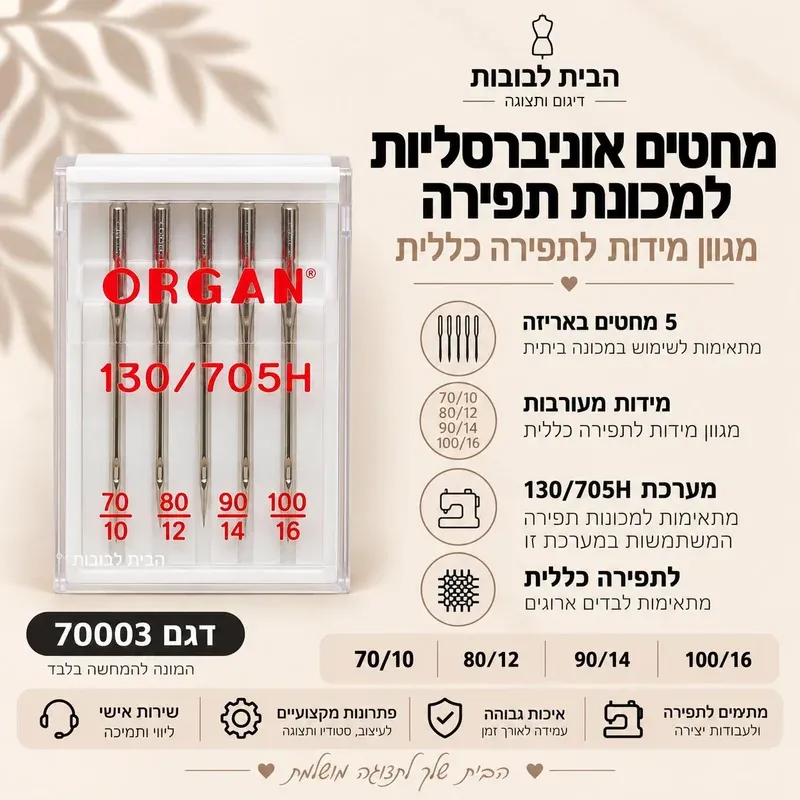
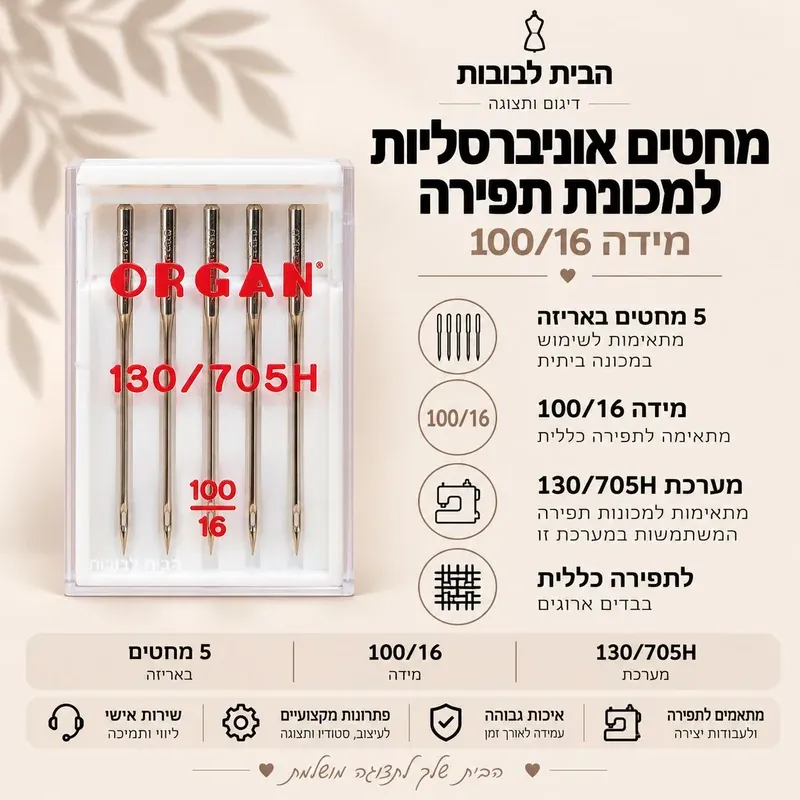
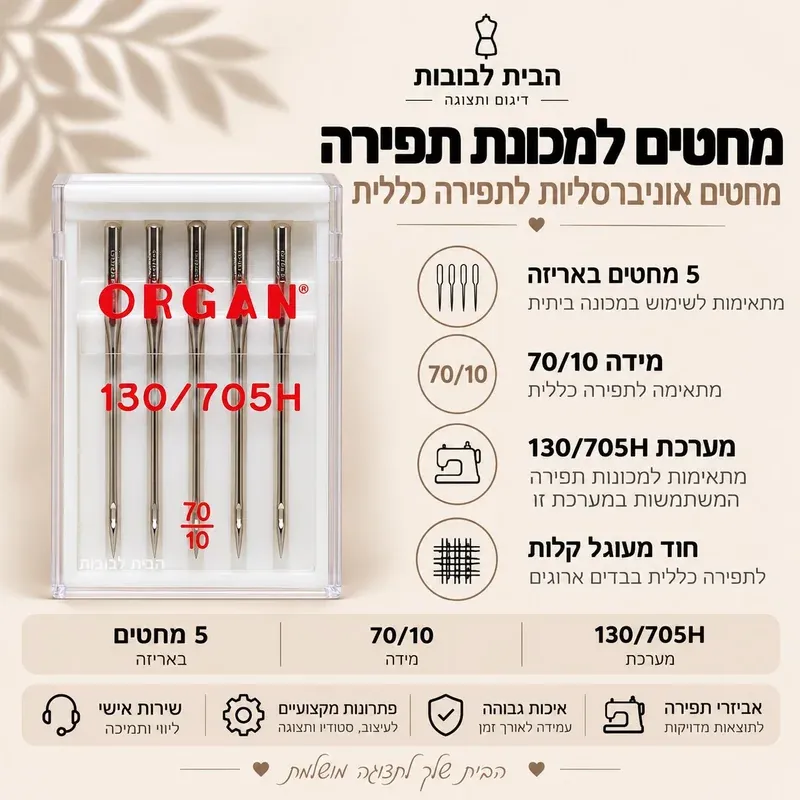
Needles for home sewing machines: ORGAN and Prym system 130/705H needles in sizes 60/8 to 100/16, mixed-size packs and ballpoint needles for knit fabrics.
Hand-sewing needles: self-threading needles, wool needles for mending knits, long doll needles and Prym assortments.
Embroidery needles: BOHIN crewel needles and a Prym assortment for embroidery and handicrafts.
Upholstery needles: Prym curved needles and 25 cm mattress needles.
Needle threaders: a threader with LED light and the Prym Needle Fairy automatic threader.
Why the needle matters as much as the machine
Most sewing problems start with the needle, not the machine: skipped stitches, broken thread, snags in the fabric, holes in delicate fabrics and a clicking noise with every stitch. A needle that is too thick leaves holes, one that is too fine bends and breaks, and a needle with the wrong point damages the fabric fibers instead of slipping between them. Needles are part of the Sewing Supplies category, alongside Pins and Tailor's Shears.
Needles for home sewing machines
Needle system: will it fit your machine?
All machine needles in this category are system 130/705H, also labeled HAx1 or 15x1. This is the system used by most home sewing machines, including Singer, Brother, Janome, Bernina and Pfaff. The needle shank has a flat side, which faces the back on most machines, so the needle can't be inserted the wrong way. Industrial machines use other systems, such as DBx1, so these needles don't fit them. Home overlockers and coverstitch machines sometimes use a special variant of the system, so check your machine manual.
What's in this category
ORGAN universal: needles from a Japanese needle manufacturer, 5 per pack, in sizes 70/10, 80/12, 90/14 and 100/16, and also in a pack combining all four sizes.
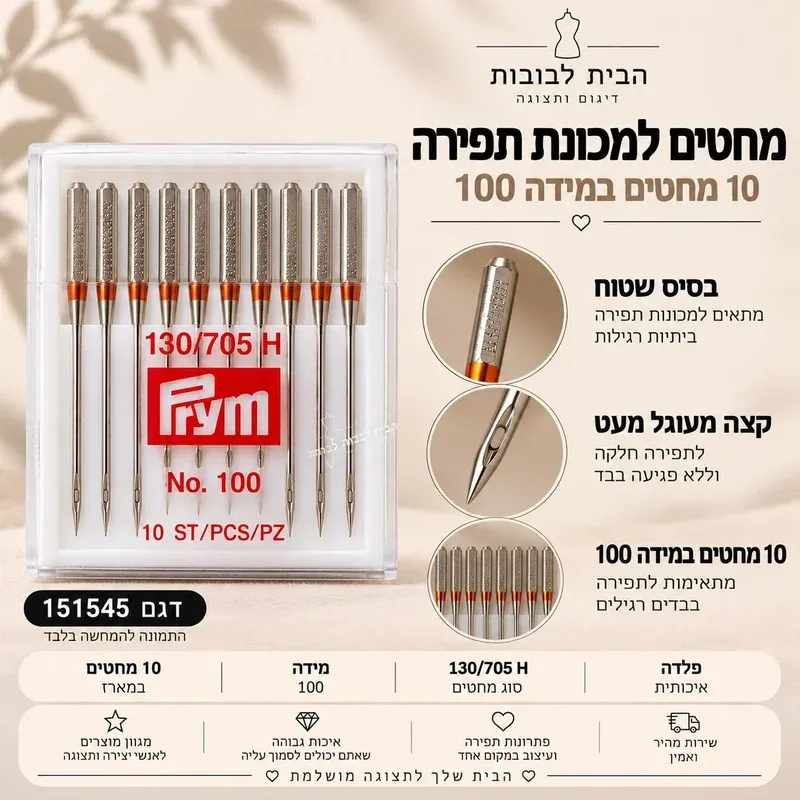
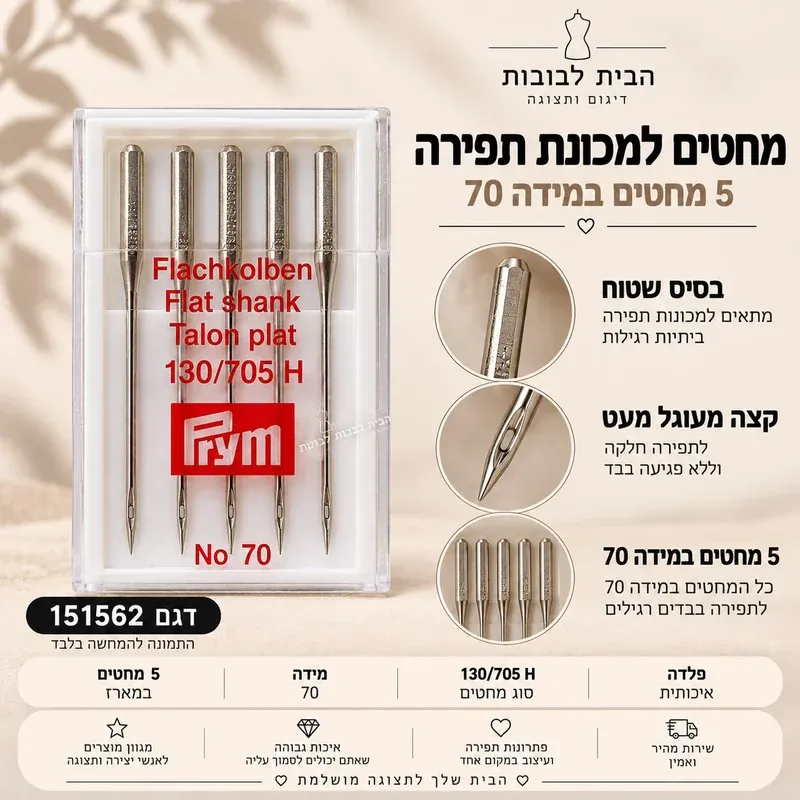
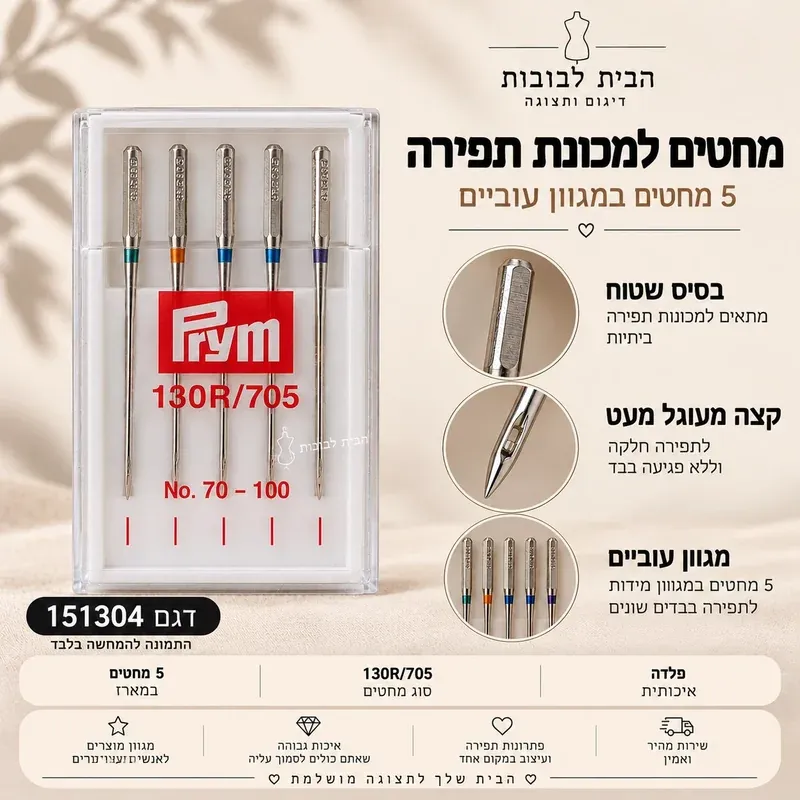
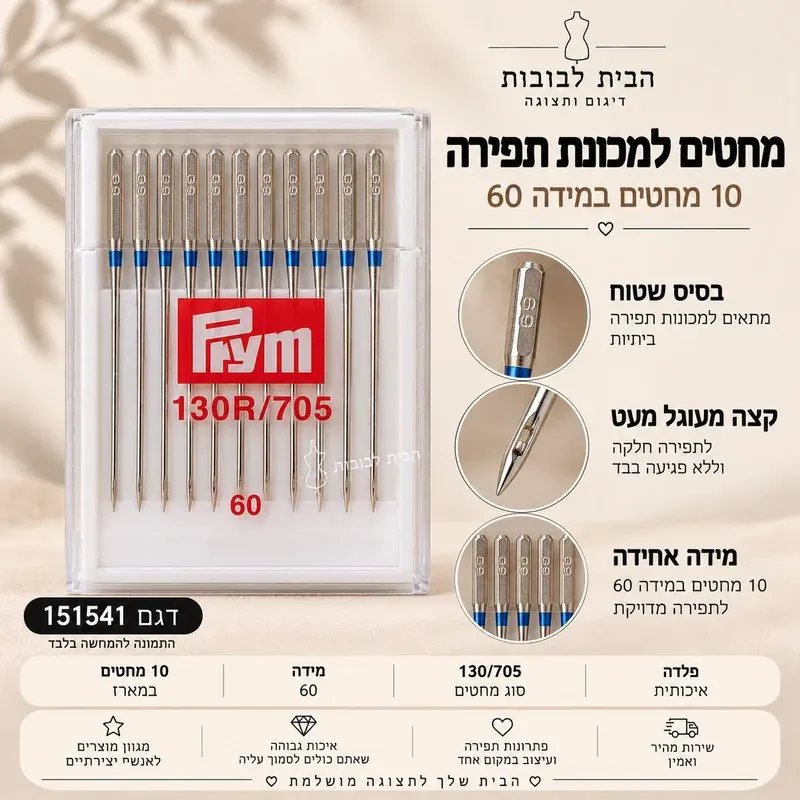
Prym universal: sizes 70, 80 and 90 in a box of 5, size 100 in a box of 10, the very fine size 60 in a box of 10, and two mixed packs: 75 to 90 for light and medium fabrics, and 70 to 100 from fine fabric up to denim. Each needle in the pack has a colored band on the shank that distinguishes the sizes.
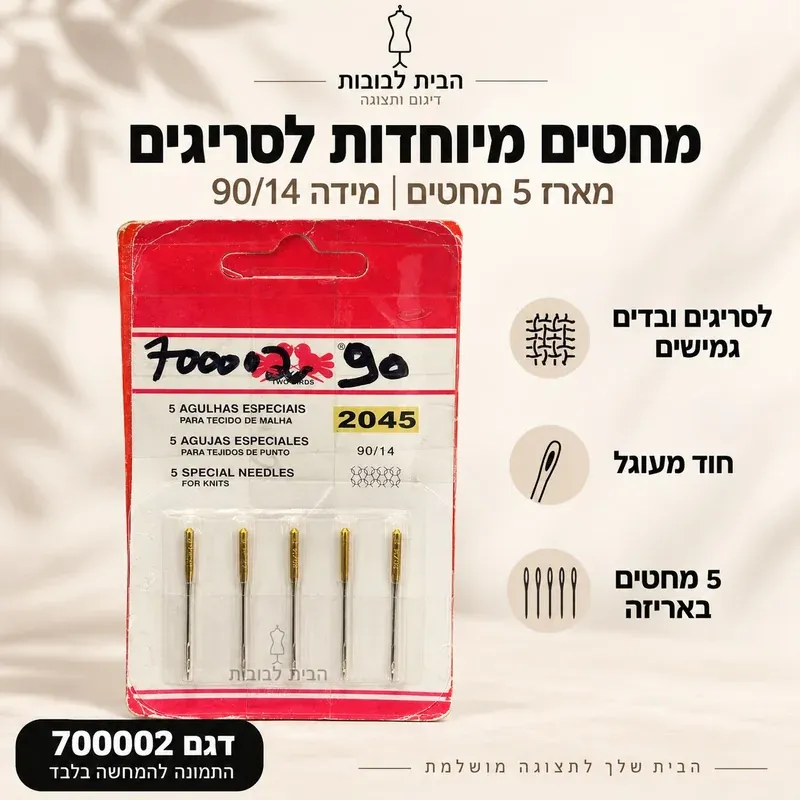
Japanese 100/16 needles with a marked eye: a heavy HAx1 system needle with a gold-colored finish around the eye that stands out against the metal, 5 per pack.
Ballpoint needles for knit fabrics: in sizes 80/12 and 90/14, 5 per pack. The rounded point pushes the knit loops aside instead of piercing them, preventing small holes and skipped stitches in tricot, jersey, interlock and French terry.
Needle size: thickness by fabric
Every pack shows two numbers, for example 80/12. The first is the metric system and the second the American system. The higher the number, the thicker the needle.
60/8 to 70/10: very fine fabrics such as chiffon, organza, silk and lining.
75/11 to 80/12: light and medium fabrics such as cotton, poplin, viscose and crepe. This is the range for most projects, and for knits it is the size for light tricot and jersey.
90/14: medium-to-heavy fabrics such as linen, gabardine and light wool, and thick knits such as French terry and sweatshirt fleece.
100/16: heavy fabrics and layers, such as denim, canvas and upholstery fabrics.
Universal or ballpoint
A universal needle, with a slightly rounded point, suits most woven fabrics: cotton, linen, curtain fabrics and heavy fabrics according to size. In a knit fabric it may pierce the loops and break them, and that's where you switch to a ballpoint needle. For fabrics with a high elastane content, such as swimwear fabrics, a dedicated stretch needle is a better fit.
When to change a needle and how to insert it
Change the needle at the start of every project, whenever you switch to a different fabric type, and right after the needle has hit a pin, a zipper or a button. A click with every stitch, skipped stitches or breaking thread are signs that the needle is dull. To insert a needle, lower the presser foot, raise the needle to its highest point and loosen the screw. Push the needle all the way up, with the flat side of the shank facing the back on most machines, and tighten. A needle that isn't pushed all the way in is a common cause of skipped stitches.
Hand-sewing needles
With hand needles the numbering is reversed: the higher the number, the finer the needle. All needles for mending and crafts are gathered in Hand-Sewing Needles.
Self-threading needles: a Prym card of 6 needles in sizes 5 to 9, with an open spring eye into which the thread is pressed from above, and a pack of 12 hand needles in assorted lengths with a threading slot at the top of the needle.
Short wool needles: 6 Prym needles in sizes 5/0 to 1/0, with a wide eye for wool yarn. For mending knits, joining sweater pieces and weaving in yarn ends after knitting.
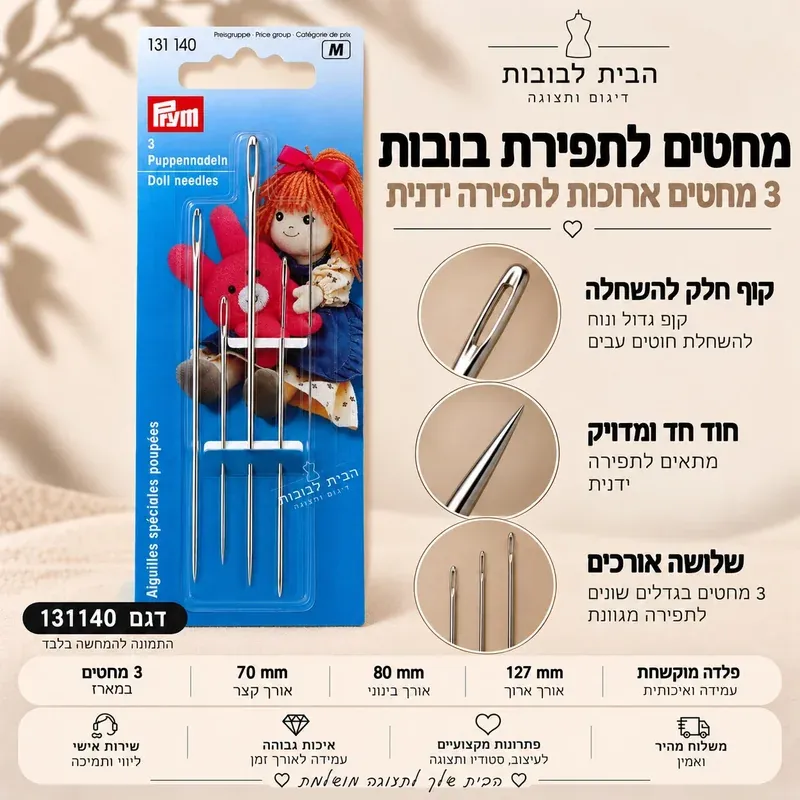
Doll needles: 3 long Prym needles, 70, 80 and 127 mm long, that pass through a stuffed body from side to side – for example to attach an arm or sculpt the face of a cloth doll.
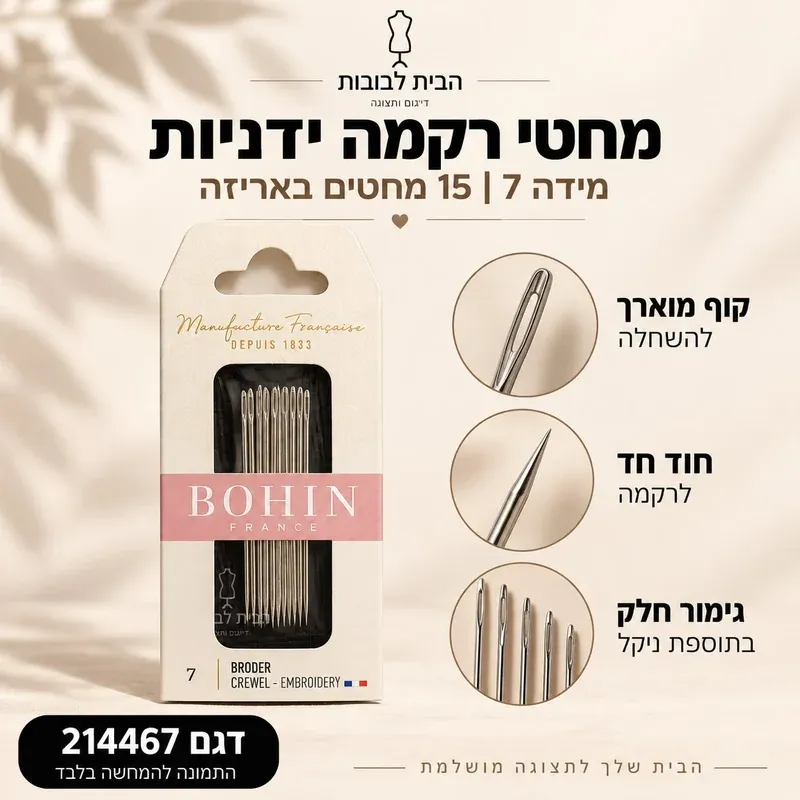
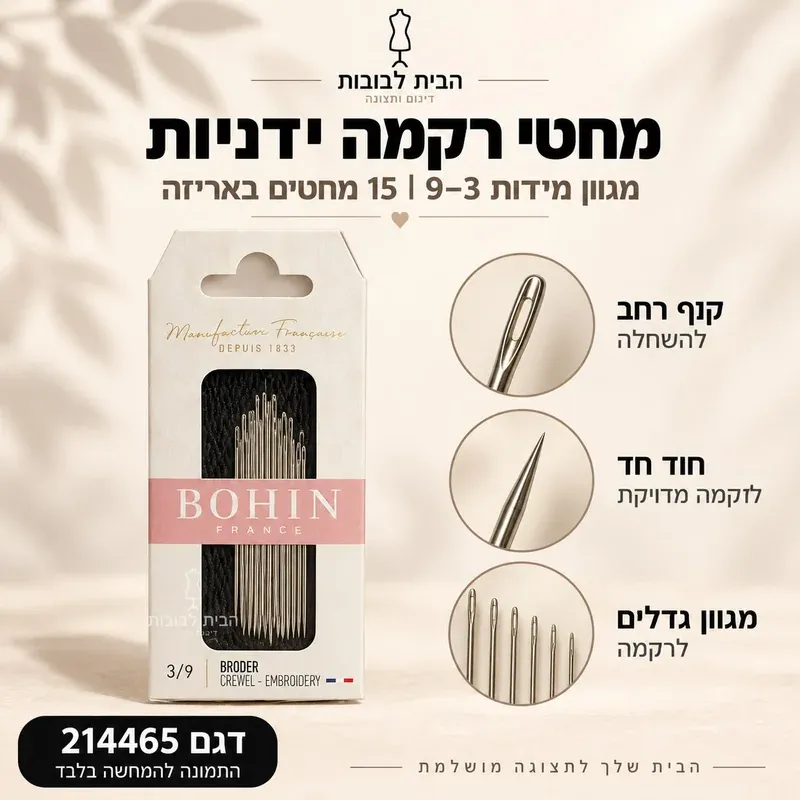
Embroidery needles: crewel needles from the French maker BOHIN, with a sharp point and an elongated eye for multi-strand embroidery floss, 15 per pack, in size 7 or mixed sizes 3 to 9. A Prym handicraft and embroidery assortment includes 10 needles: 4 embroidery needles, 5 crewel needles and one curved upholstery needle. Everything is in Embroidery Needles.
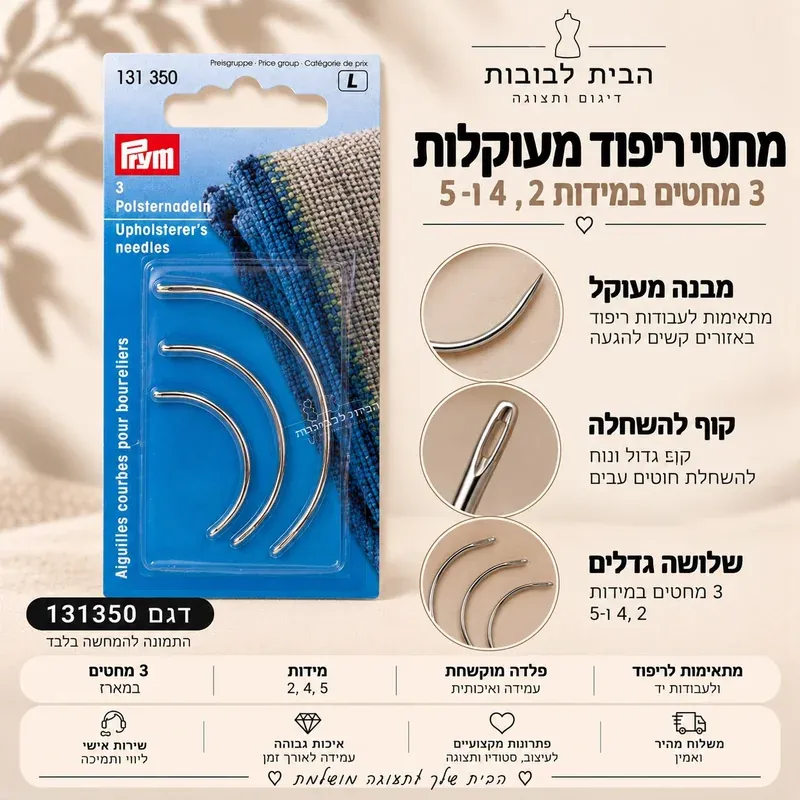
Upholstery needles: 3 semicircular curved Prym needles in sizes 2, 4 and 5, which sew from one side of the fabric without reaching the other, and a pair of straight Prym mattress needles, 25 cm long and 2.35 mm thick, that pass through the filling from side to side. Both are in Upholstery Needles.
Needle threaders
For anyone who finds threading difficult, there are two Prym threaders: an automatic desktop threader, which according to the manufacturer suits hand needles 0.5 to 0.9 mm thick and has a blade for cutting the thread, and a threader with a built-in LED light and thread cutter that illuminates the needle eye in low light. Both are in Needle Threaders.
Professional tips
Match the needle to the thread: the thread should pass freely through the eye and the groove of the needle. Thick thread needs a thicker needle.
Sew a test: before a new garment, sew a few centimeters on a scrap of fabric from the same roll and check the seam on both sides.
Don't sew over pins: remove each pin before the needle reaches it. Hitting a pin damages the point or breaks the needle.
Store needles by type: keep them in their original packaging, and don't mix used needles with new ones.
Check on the form: after sewing, put the garment on the dress form and check that the seams lie flat and don't pull the fabric.
Related guides:
Sewing machine needles: how to choose by fabric type and weight
Hand-sewing needles: how to identify a needle by point, eye and size
Wholesale needles for sewing workshops, studios and schools
Needles are a consumable, and in a sewing workshop or classroom they're replaced all the time. HaBayit LaBubot sells wholesale sewing needles to sewing workshops, studios, sewing schools, fashion programs and shops. For a quantity quote, call 03-9444226, message us on WhatsApp at 055-2473993 or reach out via Contact Us. You can order on the website and pick up from Kfar Giladi 15 or HaMashbir 17 in Tel Aviv, or have it delivered according to the terms on the Shipping & Returns page.
Frequently asked questions
How do I know which needle fits my sewing machine?
Most home machines, including Singer, Brother, Janome and Bernina, use the 130/705H system, also marked HAx1 or 15x1. All the machine needles in this category use this system. Industrial machines use other systems, such as DBx1, and home sergers sometimes use a special version, so check the machine manual or the marking on the old needle.
What do the numbers on the needle pack mean?
The first number, for example 80, is the metric size, and the second, for example 12, is the American size. For machine needles, the higher the number, the thicker the needle: 60/8 and 70/10 for very fine fabrics, 80/12 for most fabrics, 90/14 for medium-heavy fabrics and 100/16 for denim and heavy fabrics. For hand needles the numbering is reversed, and a higher number means a finer needle.
How often should you change a sewing machine needle?
At the start of every project, every time you switch to a different fabric, and immediately after the needle hits a pin, a zipper or a button. A clicking sound with every stitch, skipped stitches or breaking thread are signs the needle is blunt. A worn needle can look fine, yet its point is already damaged.
Which needle suits jersey, knit and sweatshirt fleece?
For knit fabrics, a ballpoint needle is suitable, as it pushes the knit loops aside instead of piercing and tearing them. For light and medium jersey choose 80/12, and for sweatshirt fleece and heavy jersey 90/14. For fabrics with a lot of elastane, such as swimwear, a dedicated stretch needle is a better choice.
Which needle suits denim and heavy fabrics?
For denim, canvas and upholstery fabrics, a heavy universal needle in size 100/16 is suitable, such as ORGAN 100/16 or Prym 100 in a box of 10. On seams that pass through several layers of denim, sew slowly, and replace the needle as soon as it starts knocking or skipping.
When is it worth buying a mixed-size pack?
A mixed pack suits anyone who sews different types of fabric and wants the right needle for each fabric without buying several packs. The ORGAN pack contains 70/10, 80/12, 90/14 and 100/16, and the Prym packs contain 75 to 90 or 70 to 100, with a colored band on each needle to tell the sizes apart. If you mainly sew one fabric, buy a single-size pack.
What is a crewel needle and what is it used for?
A crewel needle is an embroidery needle with a sharp point and an elongated eye, suited to multi-strand embroidery floss and fine wool yarn. Crewel needles from the French brand BOHIN come 15 to a pack, in size 7 or in assorted sizes 3 to 9. As with all hand needles, a higher number means a finer needle.
When do I use a curved needle and when a mattress needle?
A half-circle curved needle sews from one side of the fabric without reaching the other side, so it is ideal for repairing sofas and covers and for closed seams. A straight mattress needle, 25 cm long, passes through the filling from one side of a mattress or cushion to the other, for example for tufting buttons.
What can you do when a hand needle is hard to thread?
There are three options: self-threading needles, where the thread is pulled in from above through a slot at the top of the needle; a Prym automatic threader for hand needles 0.5 to 0.9 mm thick; and an LED threader that lights up the needle's eye. The threaders are in Needle Threaders.
How do I insert a needle into a home sewing machine?
Lower the presser foot, raise the needle to its highest point and loosen the screw. Push the needle all the way in, with the flat side of the shank facing the back on most machines, and tighten the screw. A needle that is not fully inserted is a common cause of skipped stitches.