Prototyping mannequin or mannequin: what is the difference and what is suitable for each use
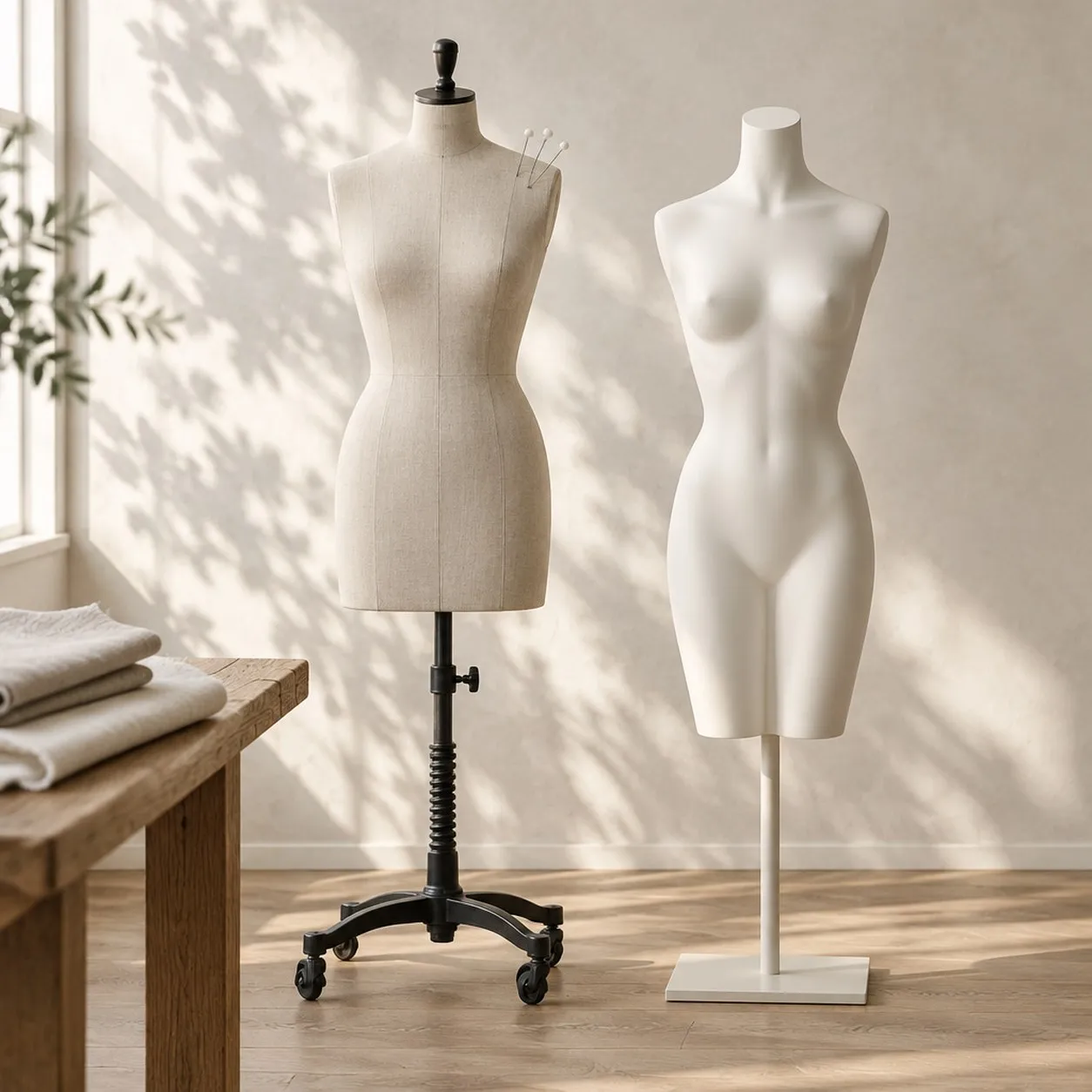
A modeling mannequin is a padded tool for sticking pins in specific body dimensions, and a mannequin is a display tool made of hard material. What is the difference in structure, dimensions, and use, and how to choose according to three questions.
The difference between a model mannequin and a mannequin is first and foremost a difference in the role: a model mannequin is a sewing tool, built of a padded body that is coated with fabric and receives pins, and has defined body dimensions that allow you to build a garment on it. A mannequin is a display tool, made of a hard material such as fiberglass or plastic, and is designed to display a ready-made garment in a window or store. Both look similar from a distance, but they differ in material, proportions, status, and daily use, so the choice between them depends on one question: whether you sew on the mannequin or display on it.
What is a modeling doll and why is it built this way
A dress form doll was born in fashion houses and sewing parlors as a tool for building a garment directly on the body. Its core is rigid, topped with a layer of padding and above all a well-sewn fabric coating. This structure makes it possible to pin pins, mark lines with marking tape and attach fabric while dripping without damaging the doll. In professional dolls, the entire body is padded and absorbs pins straight inwards; in homemade and adjustable dolls, the coating is thinner, and the pins fit mainly at an angle.
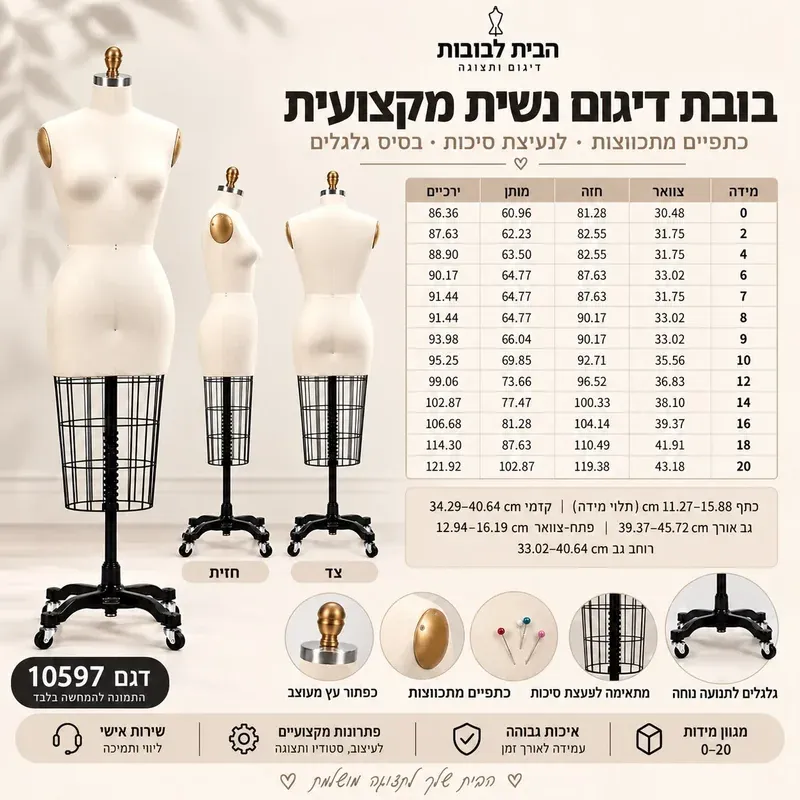
Two other characteristics distinguish a professional modeling doll: shrinking shoulders, which allow you to take off a narrow and closed garment without tearing a seam, and a metal cage at the bottom, which helps mark a hem. On the website, you can see this structure ina professional female modeling doll with shrinking shoulders and a cage, which comes in 13 fixed sizes with a full circumference chart. A modeling doll always stands in a straight and neutral position, because this way the fabric falls off it in a way that can be replicated on a real body.
What is a mannequin and what does it give to the store
Mannequin is designed to present a ready-made garment in an eye-catching way. It is made of a hard material, usually fiberglass or plastic, with a matte or glossy finish, in white, black, or body tone. Its proportions are designed to make the garment look good, not to represent an exact body size to be sewn. There are full-bodied, upper torso, lower body, and buttocks display, and some in different poses that serve a visual story in the window.
The simple example is a female torso for display from the neck to the thighs in matte white: rigid plastic, height 83 cm, bust 88, waist 68 and hips 97 cm. These figures are important to match the size of a garment to the display, but it is impossible to stick a pin into the doll, and it does not have a fabric coating that can be marked on. For choosing a type, material and finish for the store, there is a separate guide.
Difference Between Prototyping Mannequin and Mannequin: Comparison by Characteristics
Material and surface: A modeling mannequin is a rigid core, upholstery, and fabric coating; a mannequin is fiberglass or hard plastic. This is the difference that determines everything else.
Pin pins: In a modeling doll, pins are inserted, cloth is attached, and lines are marked with marking tape. In a mannequin a pin does not go in, and trying to stick it leaves a scratch or crack in the finish.
Dimensions: A modeling mannequin is sold according to defined body sizes with a circumference chart of chest, waist and thighs, and sometimes also neck, back length, and front length. A mannequin is sold according to its appearance and finish, and its body measurements are only used to adjust the size of the garment that is displayed on it.
Shoulders: A professional modeling mannequin has shrunken shoulders to lower a closed garment. In a mannequin the shoulders are fixed, so a narrow garment is dressed through the removable hands or from the bottom. The correct dressing order is detailed in the guide to dressing up a mannequin.
Posture: A modeling mannequin stands straight and neutral. A mannequin can be modeled in pose, with hands at different angles or a weight on one leg.
Stand: A model mannequin stands on an adjustable post, often with wheels or on a wooden tripod, to adjust the height of the work to the seamstress. A mannequin stands on a flat base or pole that goes into the leg or buttocks, or is placed directly on a shelf or counter.
Cleaning and maintenance: The fabric coating of a modeling mannequin is susceptible to stains and dust, so it is covered when not working. The matte finish of a mannequin is susceptible to scratches and makeup marks. Both types have a separate cleaning guide on site.
What happens when the wrong doll is used
The common mistake is to buy a cheap mannequin in order to sew on it. The result: you can't stuck, you can't mark, and the doll's designed proportions, which are sometimes very narrow at the waist or elongated at the neck, make a mistake in adjusting the figure. The actual result is a garment that sits on the doll and not on the client.
The opposite mistake is less serious but exists: placing a padded modeling doll in a shop window for months. The fabric coating absorbs dust and sun, the shade fades, and the mannequin has no hands or pose that tell a story. A modeling doll in cream fabric can be a beautiful display item in a boutique or studio, but as a permanent display item in a window, it requires more frequent replacement and protection than a fiberglass doll.
When can you work with one instead of the other
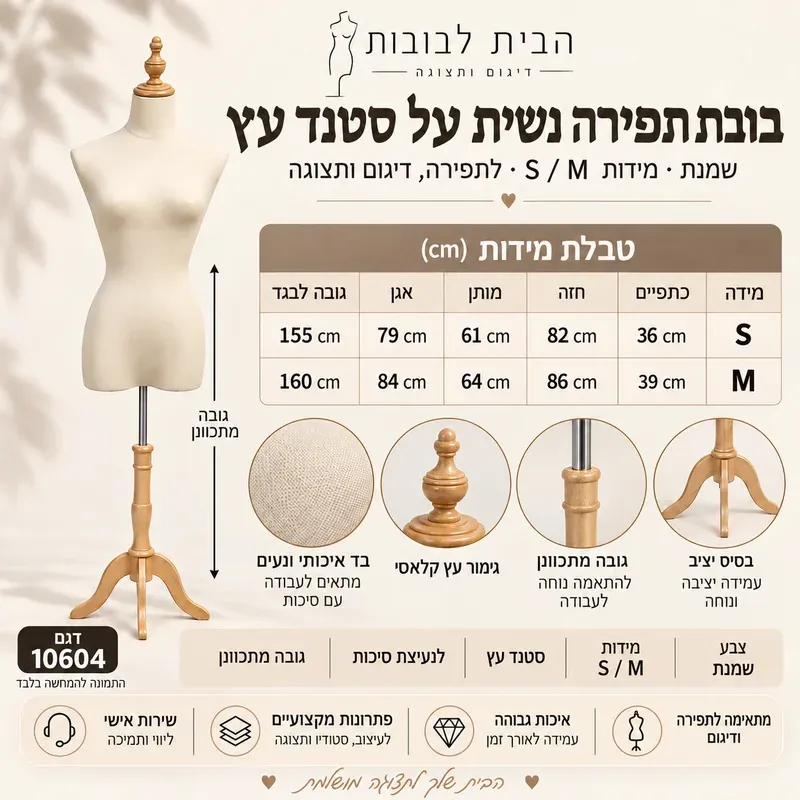
There is an overlapping area, and it is important to know it. A prototype doll with a fabric coating serves well for cataloguing for an online store, a designer's studio that receives clients, and a small boutique that wants the look of a workshop. An example of this is a female sewing doll on a wooden stand in cream fabric, in sizes S (chest 82 cm) and M (chest 86 cm), which is suitable for sticking pins and also looks good when dressed. In such a job, the mannequin serves two roles, provided that the clothes fit her size.
In the other direction, a mannequin can be used to test the general appearance of a ready-made garment, to present a prototype to a client or for a photoshoot, but not for prototyping. If you need to both sew and display, the professional solution is two separate mannequins, or one prototype mannequin for work and one display mannequin for a window. For photographing clothes on a mannequin there is a separate guide on the site, including which mannequin is suitable for which type of photography.
Men, children and partial torso: same difference, different scale
The difference is also maintained outside of the female mannequin. A model mannequin for a man or boy is still a padded body with a size chart, and a mannequin for a man or boy is still a rigid material or a display torso whose dimensions are used only to fit a garment. A partial torso, top or bottom, also belongs to the world of display: it displays bras, swimsuits or underwear on a counter, but is not intended for cutout work. When a product is described as a "show mannequin" or "display torso", it is considered a display tool even if it is coated with fabric.
How to decide: three questions
Do pins stick ? If the answer is yes, even from time to time, you need a modeling doll. There is no way to stick it in fiberglass.
Does size matter? When sewing for a customer's size or for a collection size chart, choose a sample doll according to a size chart. In the display, choose a mannequin according to the size in which most of the clothes in the store are sold.
Where will the mannequin stand? In a shop window with sun, strong lighting and frequent changes, it is preferable to have a hard material that wipes off. In the studio, classroom or sewing room, the padded fabric is an advantage rather than a disadvantage.
Fashion students and seamstresses who work alone almost always need a modeling doll; clothing stores almost always need mannequins; designers with studio and direct sales benefit from a combination of both. On choosing the exact type of modeling doll, adjustable, fixed-size or with hips, there is a detailed selection guide.
All pin puppet modeling dolls are in the category of prototyping and sewing dolls, and the puppets for stores are in the category of mannequins. If you are still not sure which mannequin is suitable for your work, you can see the two types side by side in the showroom at Kfar Giladi 15 in Tel Aviv, or contact us for advice.
Frequently asked questions
Is it possible to stick pins in a mannequin?
No. A mannequin is made of fiberglass or hard plastic, and a pin will not fit in it. Trying to pin it leaves a scratch or crack in the finish. To pin a pin, you need a mannequin with a padded body and fabric covering.
Is it possible to sew on a mannequin if there is no mannequin?
You can put a ready-made garment on it and check the general appearance, but not the model. You can't pin or mark it, and its designed proportions don't represent a body size for sewing. To work on a cut, you need a mannequin.
Is a mannequin suitable for a shop window?
For a short period or in a boutique with a workshop look, yes. In a window with sunlight and strong lighting, the fabric covering absorbs dust and fades, and the doll has no pose or hands that tell a story. For permanent display in a window, a fiberglass or plastic doll is more durable.
What is the difference in size between a mannequin and a display mannequin?
A mannequin is sold according to specific body measurements with a chart of bust, waist, and hip measurements, and sometimes also neck and length. A display mannequin has body measurements, but they are only used to adjust the size of the garment for display, not to build a figure.
What are shrug shoulders and why do they only exist in a mannequin?
Shrink shoulders are a mechanism that allows the shoulders to be folded inward to remove a narrow, closed garment without opening a seam. They are present on professional mannequins because unfinished garments are often removed there. In a display mannequin, the shoulders are fixed and the garment is put on via removable arms.
Why does a mannequin always stand straight and a mannequin always pose?
A mannequin stands straight and neutral so that the fabric falls from it in a way that can be replicated on a real body and measured from. A display mannequin is designed to attract the eye, so it can stand in a pose, with arms at angles or weight on one leg.
What is suitable for photographing clothes for an online store: a mannequin or a display mannequin?
Both work, and the choice depends on the desired look. A cream-colored mannequin gives a studio look and allows the garment to be pinned in the back. A matte white or black mannequin gives a clean, uniform background and is suitable for a disappearing doll effect photo.
What does a fashion student need: a mannequin or a display mannequin?
Modeling mannequin. In fashion studies, you work with draping, pinning, and marking style lines on the mannequin, and none of this can be done on a rigid mannequin. Choose a mannequin with a padded fabric covering in a size that matches the school's size chart.
Is a cloth mannequin with an egg head a mannequin?
Not necessarily. There are display mannequins that are covered in fabric and look like a vintage mannequin, but are intended for display. What matters is whether the body is padded and accepts pins and whether there is a body size chart. Check the product description to see if the mannequin is suitable for pinning.
Can I buy one doll that can be used for both sewing and display?
For a small studio or boutique, yes: A fabric-covered mannequin on a wooden stand accepts pins and looks good when dressed. The limitation is that the clothes displayed must fit the mannequin's size. If you need a permanent display in a window and work with different sizes, two separate mannequins are preferable.