Scissors
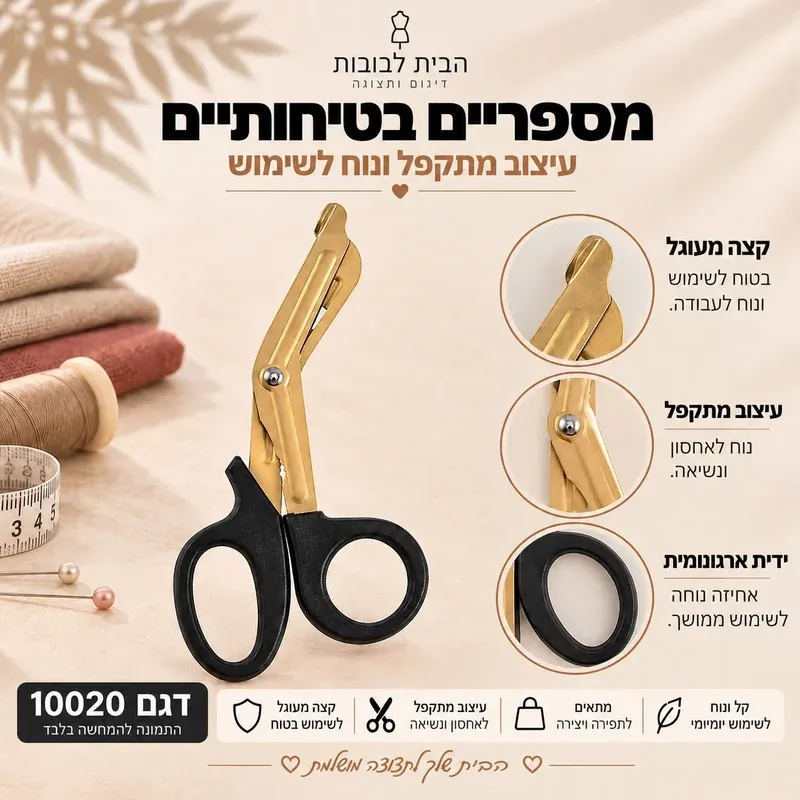
Sewing scissors for dressmakers, tailors, fashion designers and students: tailor's shears for cutting fabric, pinking shears for finishing edges, small scissors for precise work and thread snips for the machine table. Sharp, well-balanced scissors are the difference between an accurate pattern and a garment that doesn't fit right. Retail and wholesale, with delivery across Israel.
Scissors by use
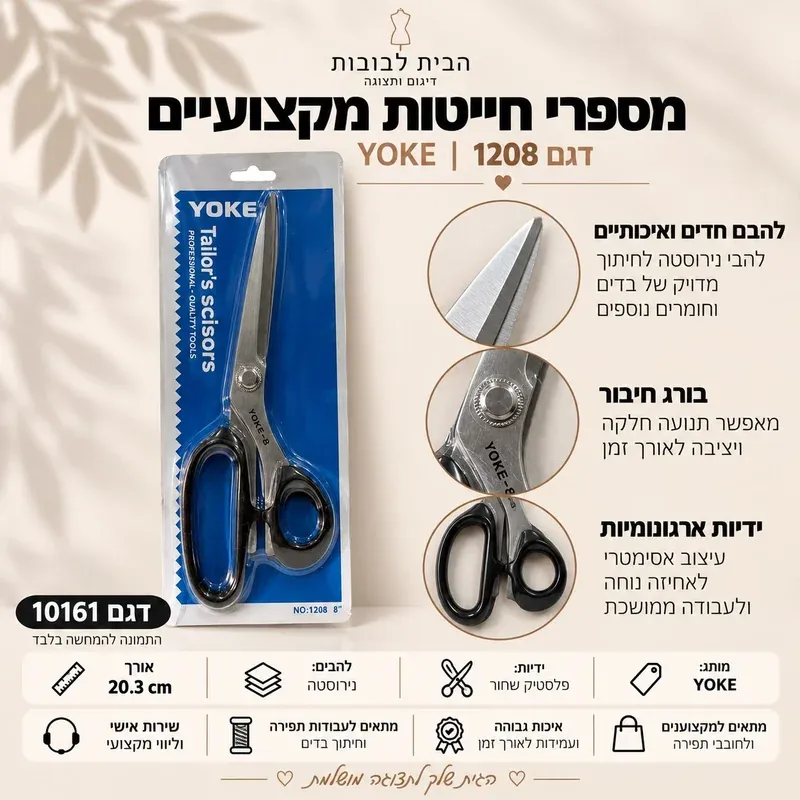
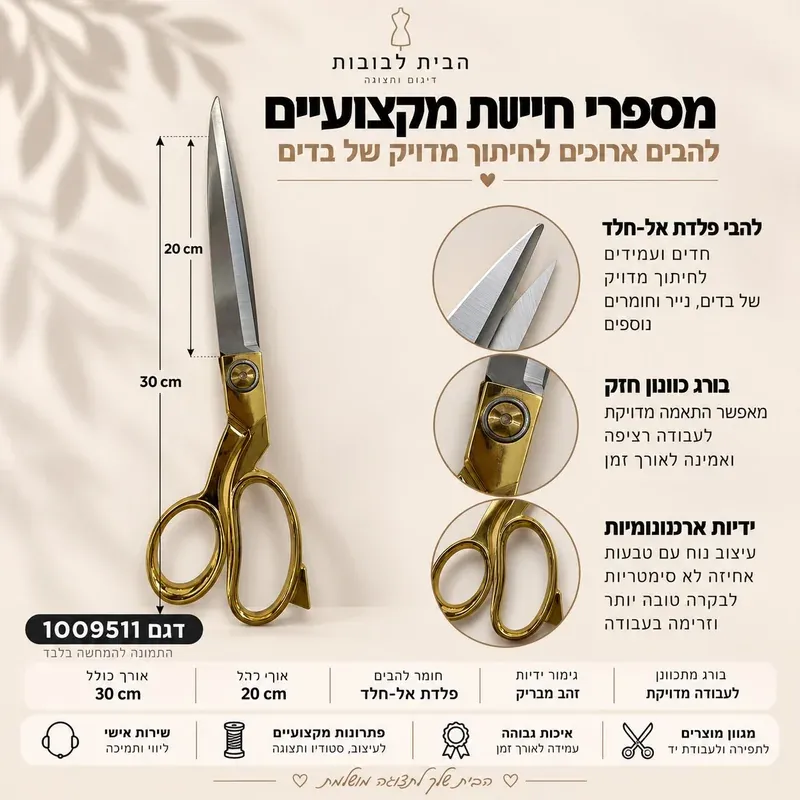
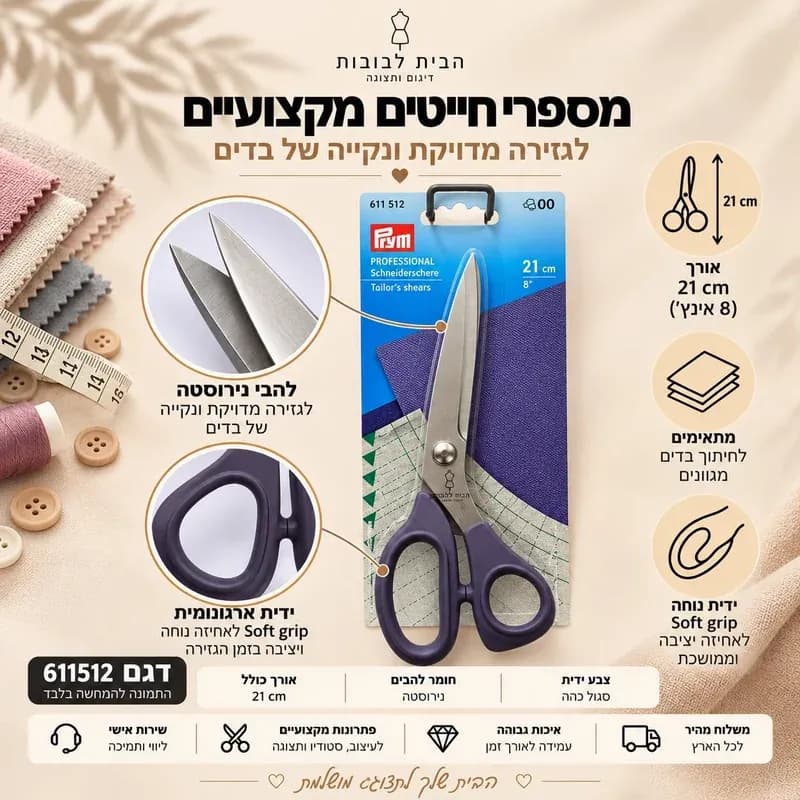
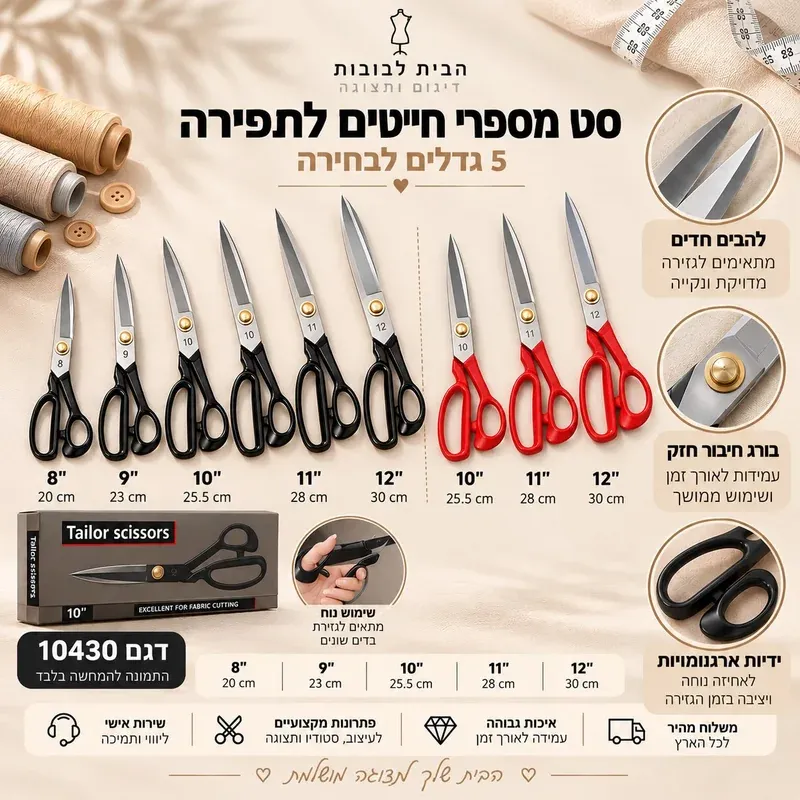
Tailor's shears and fabric scissors – for cutting patterns and fabric, 20–30 cm
Embroidery scissors and small scissors – for delicate work and cutting close to the fabric
Thread snips and thread scissors – for quick trimming by the machine
Lightweight multi-purpose scissors – for pattern paper, crafts and household use
Solingen scissors – German scissors – D.PERES and Kretzer, made in Germany
Products: 50











Sewing scissors: the tool that determines how accurate your pattern is
An accurate garment starts with accurate cutting. Dull scissors drag the fabric, leave jagged edges and shift the layers against each other, and every cutting error carries through to the seam and the finished garment. A professional studio keeps several types of scissors, each for a different job. Scissors are part of the sewing equipment category, alongside sewing notions and tape measures.
Types of sewing scissors
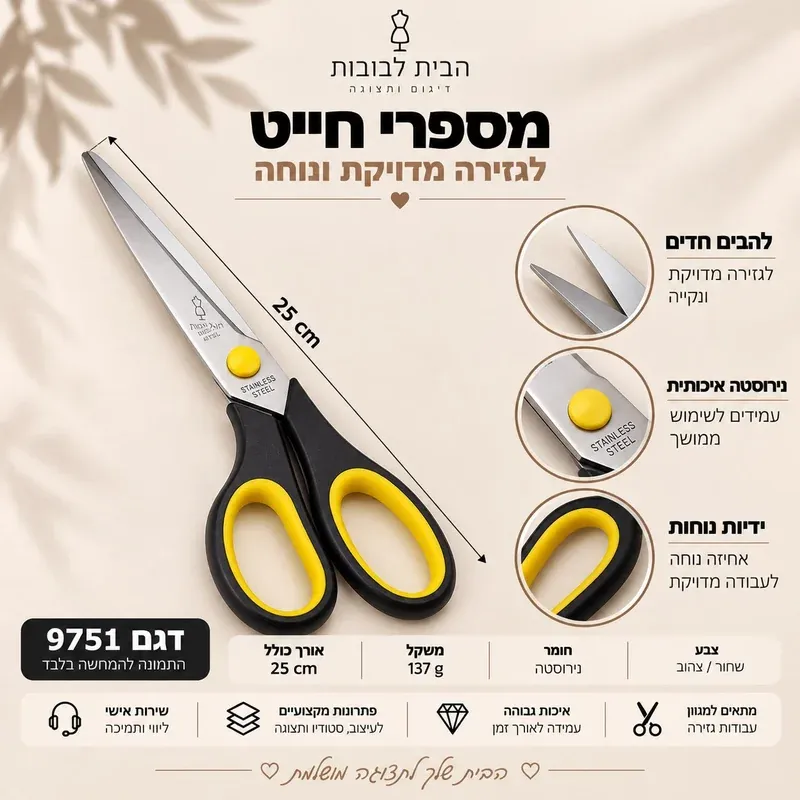
Tailor's shears
The main scissors for cutting fabric. The handle is raised and bent, so the lower blade stays flat on the table and the fabric doesn't lift while cutting. The common length is 20 to 25 cm (8 to 10 inches). Shears of 28 to 30 cm (11 to 12 inches) suit long cuts and thick fabrics.
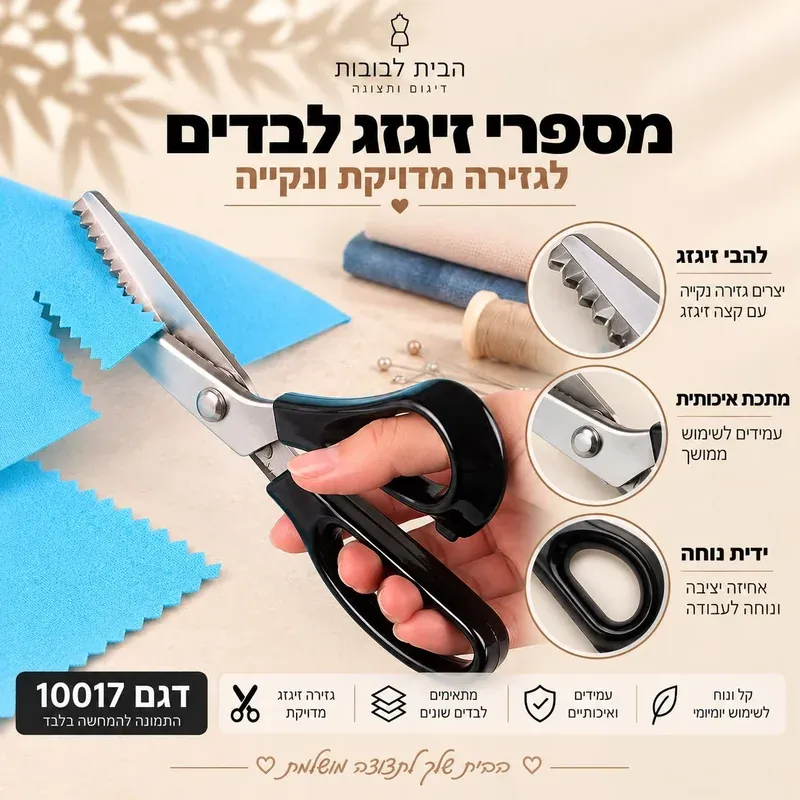
Pinking shears
Blades with a serrated cut that trim seam allowances in a zigzag and reduce fraying on woven fabrics when you don't have an overlocker. They are used for finishing, not for cutting the pattern lines themselves.
Small scissors
Scissors about 10 to 15 cm long with a sharp point: for clipping notches in curved seam allowances, marking matching points (notches), opening buttonholes and delicate embroidery and appliqué work.
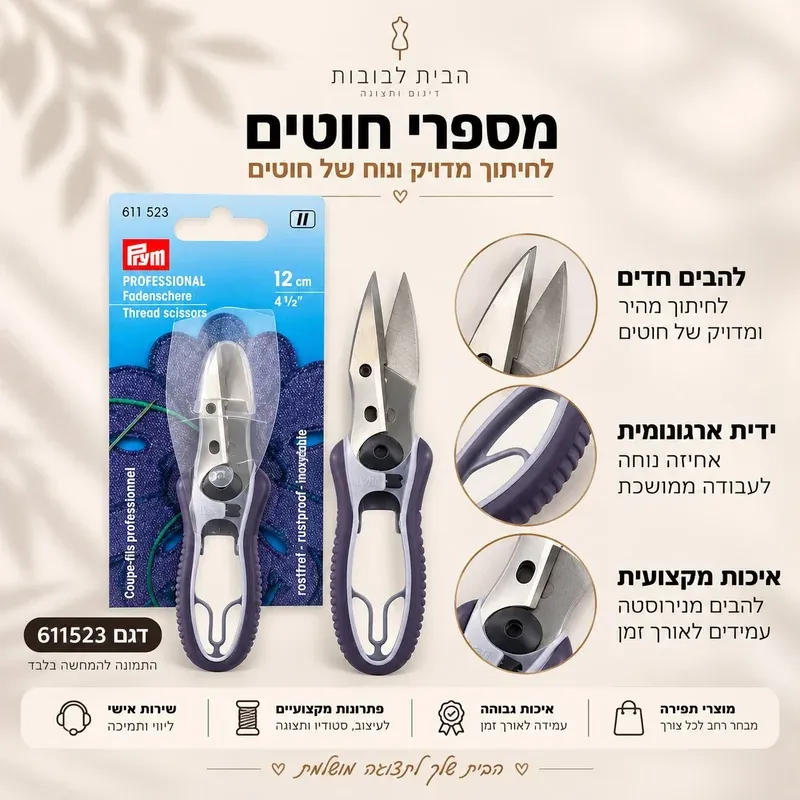
Thread snips
Small spring-loaded scissors that open by themselves after each squeeze. Keep them next to the machine and trim thread ends without putting the garment down.
Serrated-blade scissors
A blade with very fine serration that grips the fabric while cutting. Suited to slippery fabrics such as silk, chiffon, satin and lining fabrics, which tend to slide under a smooth blade.
Paper scissors
A separate pair for cutting paper patterns, tracing paper and templates. Paper dulls the blade quickly, so never cut it with your fabric scissors.
How to choose sewing scissors
Length by task
20 to 23 cm: suits most sewists, smaller hands and light to medium garments.
25 cm: the classic tailor's length. Fewer closures along each cutting line, so a straighter, cleaner line.
28 to 30 cm: for coat fabrics, denim, multiple layers and long cuts on a large table.
Blade and steel
Stainless steel blades are light, rust-free and suit most tasks. Forged steel is heavier, stays sharp for a long time and can be resharpened again and again, which makes it the choice of tailors and studios that cut a lot. An adjustable pivot screw lets you tune the tension between the blades over the years.
Handle and comfort
A cushioned or ergonomic handle reduces fatigue during long cutting sessions. For left-handed users there are dedicated left-handed scissors, with reversed blades so the cutting line stays visible.
How to cut correctly
Lower blade on the table: don't lift the fabric. Hold it flat with your other hand and cut along it.
Long strokes: open the scissors fully and close them only to about 2 cm from the tip. Closing the point fully on every stroke leaves a small step in the line.
Turn the fabric, not your hand: on curves, move the fabric slowly while your hand stays at a fixed angle.
Cut outside the marking line: that way the marking stays on the allowance and doesn't end up in the garment.
After cutting, the pieces are pinned to the dress form for a fit check, and curved seams are pressed on a pressing ham.
How to keep scissors sharp
Fabric only: don't cut paper, plastic, wire or tape. Mark your fabric scissors with colored ribbon so nobody uses them for anything else.
Don't cut over pins: a single pin can damage the blade.
Clean and oil: wipe off lint and fabric scraps after work, and every so often add a drop of machine oil to the pivot and wipe off the excess.
Store them closed: in a sheath or a box, not tossed into a drawer with other tools. A drop to the floor can bend the tip.
Have them sharpened by a professional: when the scissors start chewing the fabric instead of cutting it, it's time for sharpening.
Related guides:
Tailor's shears: how to choose by cutting length, weight and hand
Solingen scissors: what makes German steel special and how to keep it sharp
Scissors for studios and sewing schools
A basic work kit includes tailor's shears, small scissors and thread snips, and later pinking shears as well. HaBayit LaBubot sells sewing scissors wholesale to sewing schools, fashion programs, workshops and shops. For a quantity quote, reach us through the contact page. You can order online and pick up free of charge from our store at 15 Kfar Giladi St., Tel Aviv, or get delivery nationwide under the terms on the shipping and returns page.
Frequently asked questions
What length of tailor's shears should I choose?
For most seamstresses, scissors 20 to 23 cm long are suitable. The classic tailor's length is 25 cm: fewer closings along each line, and therefore a straighter, cleaner line. Scissors of 28 to 30 cm suit coat fabrics, denim and cutting several layers. It is worth choosing the longest length that is still comfortable in the hand.
Why not cut paper with fabric scissors?
Paper fibers dull the blade much faster than fabric. Scissors that have cut paper start to pull the fabric and leave jagged edges. Keep a separate pair for paper patterns and templates, and mark the fabric scissors with colored tape so no one uses them for other things.
What is the difference between tailor's shears and pinking shears?
Tailor's shears cut the pattern lines in a clean, straight line, and a raised handle keeps the fabric flat on the table. Pinking shears cut with a zigzag edge and are used to finish seam allowances, to reduce fraying in woven fabrics. They aren't used for cutting the pattern itself. More finishing and marking tools are in Sewing Accessories.
How do I keep scissors sharp and when do they need sharpening?
Cut only fabric, do not cut over pins, wipe off lint after working, add a drop of machine oil to the pivot from time to time and store closed in a sheath. When the scissors start to chew the fabric instead of cutting it, or leave jagged edges, it is time for professional sharpening. For questions about a specific model, contact us via Contact.
What types of scissors are in the store?
The scissors are divided by use: tailor's shears and fabric scissors, embroidery scissors and small scissors, thread snips and thread scissors, lightweight multi-purpose scissors, and German-made Solingen scissors from D.PERES and Kretzer.
What is the difference between thread snips and embroidery scissors?
Thread snips are squeezed in the palm and open by themselves with a spring - very quick for thread ends next to the machine. Embroidery scissors are small scissors with finger rings and a fine tip, which give more precise control in delicate work.
Are there scissors for left-handed users?
Yes. There are models with symmetrical handles that are comfortable for the left hand too, and spring-loaded thread snips suit both hands. The page of each product states which hand it is intended for.
What are Solingen scissors?
Scissors made in the city of Solingen, Germany, a traditional center for the production of scissors and knives. The name Solingen is protected by German law and may be marked only on products whose main production took place in the area of the city.
Which scissors suit slippery fabrics such as silk?
Scissors with micro-serrations, such as D.PERES TURBO, grip the fabric and prevent it from escaping between the blades - an advantage with fabrics such as silk, satin, chiffon and lining.
Can I buy scissors in wholesale quantity?
Yes. We also sell to stores, workshops, schools and sewing classes. For bulk orders you can contact us.